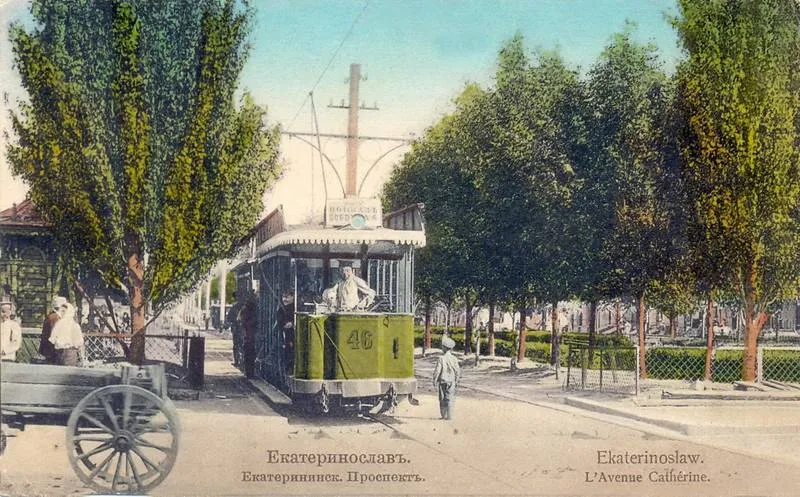
"To see the people and show oneself." Boulevards as a Marker of Modernity in Southern Ukrainian Cities


Dr. Valentyna Shevchenko
Center for Urban History17.2.2026, 18:30
Conference Room of the Center for Urban History
We invite you to the lecture by researcher Valentyna Shevchenko on boulevards as markers of modernity in southern Ukrainian cities.
"The boulevard is divided into four alleys, with the right side being particularly beautiful, planted with luxurious plane trees... The boulevard is constantly moving all day long: From early morning until late at night, the public walks here, breathing fresh air and admiring the magnificent sea view... In the evening, so many people gather that it is difficult to find a place on a bench and one has to barely move in a thick crowd," is how the author of the 1904 Odesa guidebook described Prymorskyi Boulevard. And not by chance. After all, it was the boulevards that replaced the medieval walls and became a kind of symbol of a modern city ready for transformation and interaction with the world.
Most cities in southern Ukraine did not know development exclusively within city walls or fortresses. Founded in the last third of the eighteenth and early nineteenth centuries, they were almost immediately built in accordance with the trends of the modern era. The structure of their buildings was characterized by regularity, dominance of space, large squares, and wide straight streets, and the geographical and climatic conditions of the region dictated the mandatory development of urban landscape greening projects. And it was in the boulevards that all these elements were combined.
At the same time, boulevards were initially entrusted with a cultural mission. They contributed to the increasing departure of citizens from the rural way of life and the formation of an urban lifestyle, the emergence, and establishment of new leisure and communication practices. Gradually, boulevards became an important component of the social and cultural space of cities, where people celebrated public and religious holidays, made appointments and dates, socialized, played games, and danced. Eventually, they became a kind of business card for large cities, such as Odesa and Katerynoslav (modern Dnipro), and county centers, which were more like villages, tried to emphasize their urban status by arranging at least a small place for walking, which they proudly called a "boulevard."
The researcher invites you to "take a walk" along the boulevards of the cities of southern Ukraine and look at them not only as a part of street infrastructure or landscaping, but also as spaces for creating new meanings, symbols, and patterns of behavior.
The event will take place as part of a public series about the experiences of modernity in cities, "Let's Have a City."
The lecture will be moderated by historian Dr. Vladyslava Moskalets.
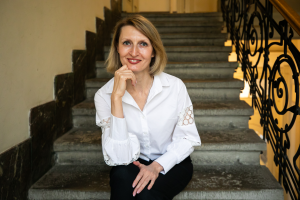
Dr. Valentyna Shevchenko
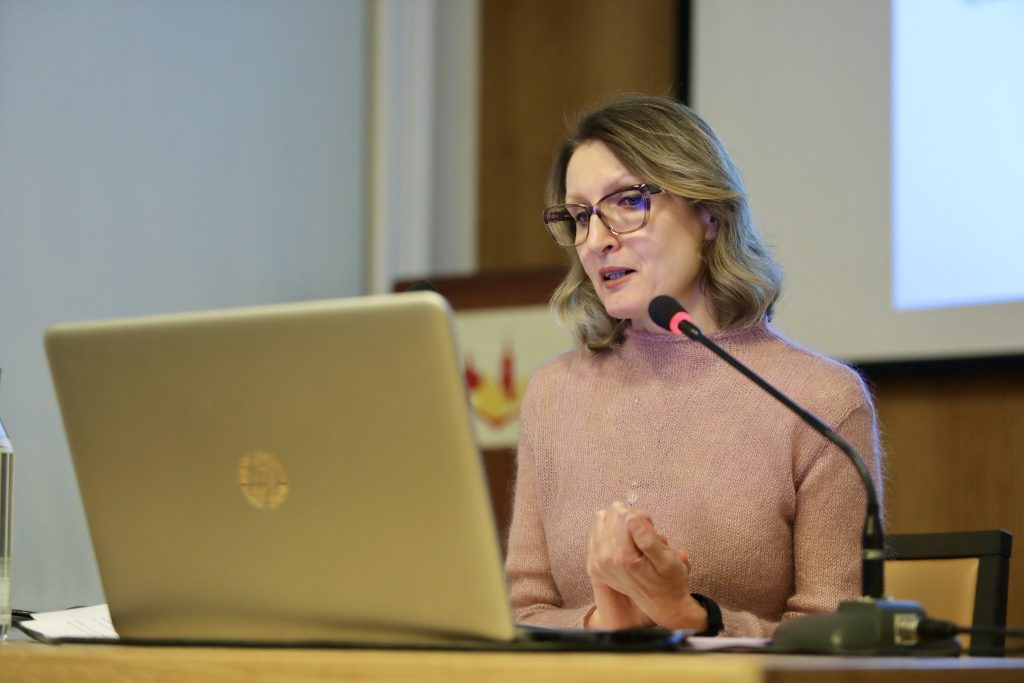
Center for Urban HistoryCandidate of History (2009), a senior research fellow at the Institute of History of Ukraine of the National Academy of Sciences of Ukraine. The Candidate thesis focused on the development of bankers’ activities on the territory of Southern Ukraine in the 19th and early 20th century. At the Center for Urban History, Valentyna participates in the project implementation “24.02.22, 5 am.: Testimonies from the War,” as a researcher and administrator of databases, and also contributes to educational initiatives. Ares of academic interests: historical urban planning, socio-economic history of Ukraine of the 19th and early 20th century, Ukrainian context of the First World War.

Credits
Cover Image: Postcard with a tram car on a boulevard in Katerynoslav (Dnipro), 1900s
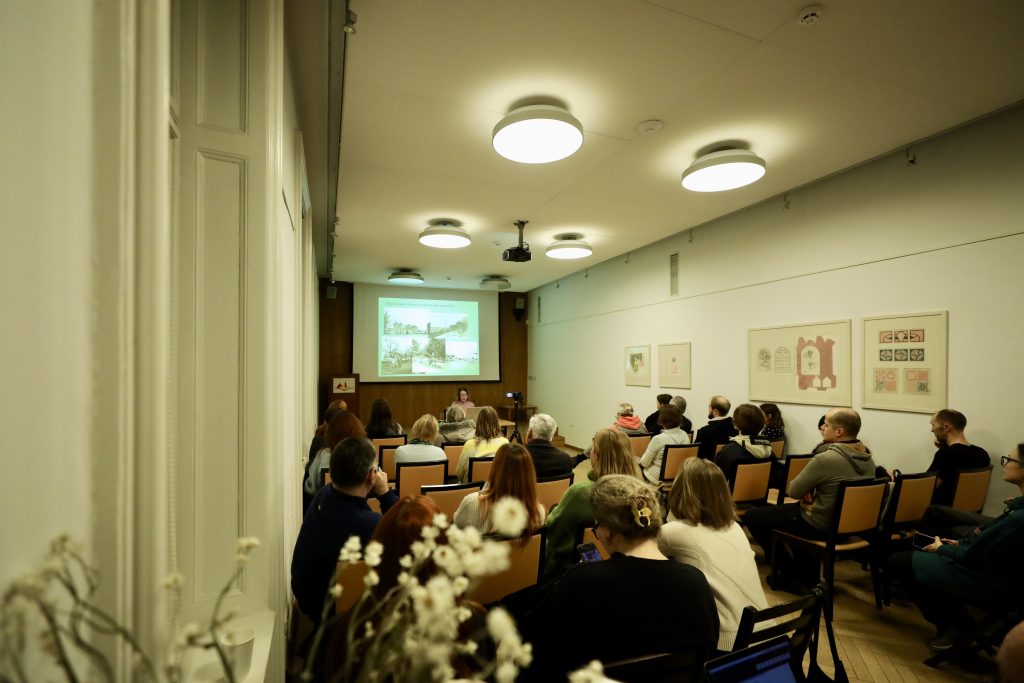
Gallery: Iryna Sereda