From Place To Place: Stories From Scattered Archives. Public Program


August-December 2026
Archives are often imagined as a collection of fixed objects, lying sealed away in boxes or on shelves, and waiting. However, an archive is not static. Materials are added to the archive, selected, organized, issued, removed, or even destroyed. Occasionally these processes take years, decades, or even centuries. Such a long duration creates the impression that the materials in the archive are simply "sitting there." At the same time, thinking about movement is helpful for understanding the nature and policies of an archive. After all, an archive can move, travel, get lost, be forgotten, or be (re)discovered. Even the very process of preserving it through digitization is a form of movement: a transition from one medium to another. What if the archive were to come down from the shelf altogether and set out in search of people's stories where they still live—in attics, in family albums, in the memories of neighbors who might recall names that no one has uttered in decades? And what if it also brought back stories scattered all over the world?
Architect and researcher Natalia Romik poses similar questions about the interconnectedness of movement and archiving in her work. Having built the Nomadic Shtetl Archive, she traveled through the towns of southeastern Poland in 2016 to examine the paradox of "present absence." The trace of a mezuzah on a doorframe, a name that no one can quite pronounce anymore, an unusual building, or an empty patch of land on a densely developed street — these are the physical traces of a vanished community. They have not been erased, yet they are rarely mentioned; they remain quietly woven into the daily lives of the residents of cities, small towns, villages, and hamlets that were once shtetls. Natalia Romik's response was not to lecture these places into remembering, but to bring tools that could gently initiate a dialogue between the past and the present. The practice of the Nomadic Shtetl Archive has shown how work with memory should proceed by meeting people where they live, rather than asking them to come and seek it out.
The Center for Urban History's exhibition-laboratory and public program, "From Place to Place: Stories From Scattered Archives" develops further this methodology. In late August 2026, the Nomadic Archive will cross the Polish-Ukrainian border and continue its journey through Lviv and five settlements that are simultaneously שטעטל (shtetls), miasteczka, and small towns — Busk, Zhovkva, Zbarazh, Pidvolochysk, and Volochysk.
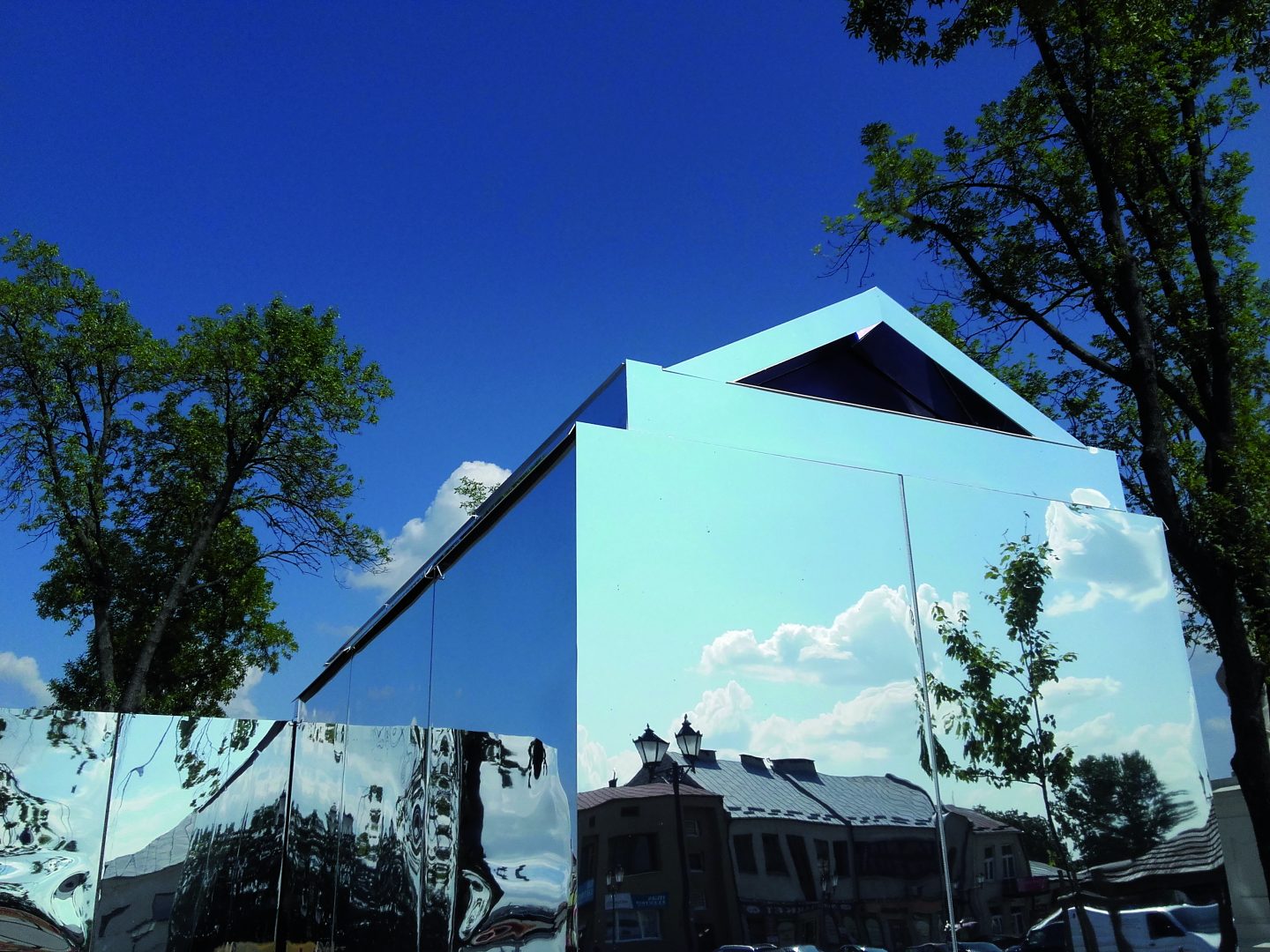
The cube, an archival credenza, and the Nomadic Archive will serve as an active background for conversations between resident-researchers and researcher-residents, while the public program and exhibition will form a dynamic dialogue, a space for listening, and a preservation laboratory. Browsing through institutional, community, and family archives will bring us together around questions such as: How can we piece together the fragmented histories of small towns and cities — shaped by shifting borders, vanished neighbors, and long silences — without reducing them to a single narrative? How should we interpret the multicultural life that once defined so many towns in this region but failed to survive intact through the ruptures of the 20th century? How should we work with discoveries in family archives that do not always align with embodied knowledge of our history? How can we find empathy while defining our positionality?
The program, created to mark the 85th anniversary of the establishment of the Lviv Ghetto, draws on scattered fragments from the archives of different generations and communities. It will begin in Lviv, in Lviv, where the third-largest ghetto in occupied Europe operated during the Nazi occupation, following a route through places where the history of the ghetto is present yet invisible within the urban fabric. Through the stories of ordinary apartments, streets, and buildings — which we have, without realizing it, inherited along with their untold histories — we will attempt to reflect: how do we speak about what we are loudly silent about?
EXHIBITION TEAM
- Liana Bliharska, Natalia Romik, curators
- Natalia Romik, Sebastian Kukharuk, exhibition architects
- Viktoria Panas, production
- Sofia Dyak, Maryana Mazurak, consulting
- Liana Bliharska, Natalia Romik, Inna Zolotar, text authors
- Oksana Avramenko, Liana Bliharska, Inna Zolotar, Anastasiya Kholyavka, Valentyna Shevchenko, work with audiovisual archival sources
- Yelyzaveta Bobrova, communications support
- Maria Mykytenko, Piotr Yakovenko, graphic design
- Sofia Nazaruk, logistics support
- Yulia Kulish, Vitalii Pavliuk, translation
- Oleksandr Dmytriiev, Tetiana Dutko, Anastasia Pendrak, technical support
- Yaryna Paniv, Oksana Rolina, financial support
- Nazar Tserna, architect of the “Card Index Cabinet” installation; Marta Buryak, consulting
- Yevhen Chervonyi (Metamuseum), Aga Szreder, PALIY, Jakub Łysiuk, technical support
PUBLIC PROGRAM TEAM
- Liana Bliharska, Viktoria Panas, Natalia Romik, curators
- Viktoria Panas, production
- Sofia Dyak, Inna Zolotar, Maryana Mazurak, consulting
- Oksana Avramenko, Mykyta Bilyi, Oleksandra Kliushnichenko, Anastasiya Kholyavka, digitization
- Liana Bliharska, Valentyna Shevchenko, interviews
- Yelyzaveta Bobrova, communications support
- Maria Mykytenko, graphic design
- Sofia Nazaruk, logistics support
- Oleksandr Dmytriiev, Tetiana Dutko, Anastasia Pendrak, Yevhen Chervonyi, technical support
- Yaryna Paniv, Oksana Rolina, financial support
PARTNERS
- SENNA COLLECTIVE, Warsaw
- Hnat Khotkevych Palace of Culture, Lviv
- NGO "After Silence," Lviv
- Jam Factory Art Center, Lviv
- City Museum, Lviv
- "Zapomniane" Foundation, Warsaw
- Community Development Institute, Zhovkva
- Zhovkva City Council Enterprise "Tourist Information Center"
- "Zhovkva Tower" Museum
- Youth of Korolivske, Zhovkva
- Zhovkva Region Development Agency
- Zbarazh City Council
- Busk City Council
- NGO "Publishers' Forum", Lviv
- Staryi Lev Publishing House
- Dnistrianskyi Centre for Law and Politics
- Wissenschaftskolleg zu Berlin
- Taube Center – For Jewish Life And Learning Foundation
- Vilne Radio, Zhovkva
We thank the Lviv City Council and the Consulate General of the Republic of Poland in Lviv for their assistance and support.
"REHERIT 2.0: Common Responsibility for Shared Heritage" project is implemented by the Center for Urban History and the Center for Regional Development of the PPV Economic Development Agency with financial support from the European Union. This public program and exhibition were created with the financial support of the European Union. The content is the sole responsibility of the partners of the "REHERIT 2.0" project and does not necessarily reflect the views of the European Union.
















Credits
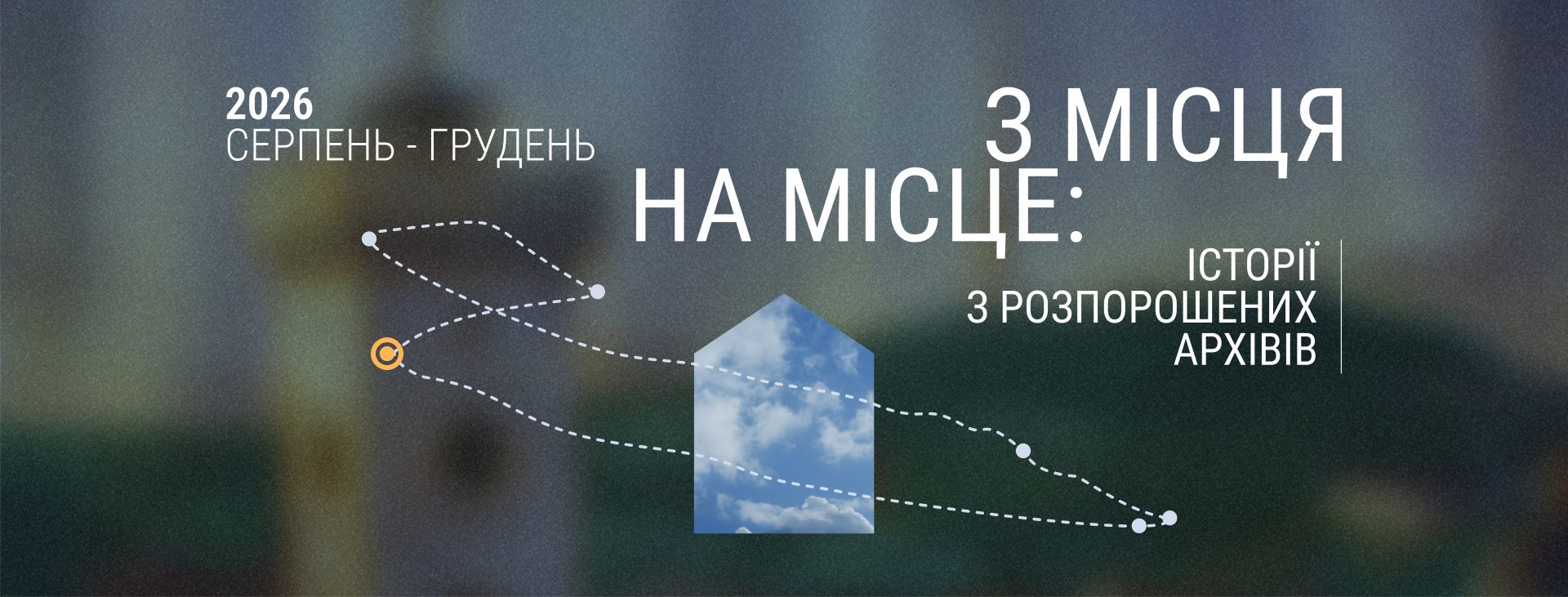
Cover Image: illustration by Maria Mykytenko