Zbarazh in Archives: The Town, People, Sources. Conversations and Digitization


8.10.2026, 13:00-19:00
Ivan Franko Square, Zbarazh
The twenty-volume "Ukrainian Language Dictionary" defines a town as a group of residential or commercial buildings, organized by purpose, and the area between them. Historians usually refer to the year in which a settlement was granted Magdeburg rights, search for documents on the construction of notable industrial sites, and examine the figures of its founders. Writers, on the other hand, attempt to capture the characterful atmosphere of a small town, often romanticizing its everyday life. But how do its residents experience it?
During this facilitated discussion, we will focus on two roles — that of the researcher-resident and the resident-researcher. Drawing on our personal experiences, will try to reflect together on what a small town actually is. What defines its rhythms and characters? What comes to mind first when we talk about the events and people there? What are our favorite places, and what are our daily routes like?
To an outside observer, Zbarazh is known for its castle, synagogue, townhouses, churches, monastery, Catholic church, the Hnizna River, and the park on Castle Hill. For centuries, townspeople of various nationalities and faiths have lived, worked, quarreled, reconciled, and married here. Some of its figures are better known, such as the Zbarazki and Potocki princes, Wilhelm Feldman, and Velvel Zbarzher; they are well-known far beyond the town’s borders, their biographies have usually been written, and separate Wikipedia pages have been created for them.
Yet the history of the town would be incomplete without the stories of ordinary people — those who have enriched Zbarazh with their experiences. Their archives often lie on bookshelves or among sets of fine pottery in a buffet. Tapes, letters, postcards and printed photographs tell stories and add nuance to the well-known narratives. They transcend the years, transporting us to memories dating back decades or even centuries. However, their physical form is not so long-lasting. Digitization is one way to preserve these unique materials, while the recorded oral accounts become sources that fill important gaps.
The event is both an invitation to share personal stories from your credenzas and an offer to digitize your private archives for free: photographs taken in the town square or near a department store, at work at a school, hospital, or factory; footage of family events, vacations, and town celebrations captured on 8-mm or 16-mm film. This is an opportunity to preserve the recent past and share your own stories. This is an opportunity to preserve the recent past and share your own stories.
PROGRAM
13:00 — Residents, Routes, Recollections: Conversations about Zbarazh
13:00–19:00 — Workshop on digitizing family photographs, slides and recording oral histories
15:00–17:00 — City Walk
Organizers: Center for Urban History in partnership with Zbarazh City Council with the support of the Ternopil Regional State Administration.
The event will take place as part of the exhibition and accompanying public program "From Place to Place: Stories from Scattered Archives," which is part of the "REHERIT 2.0: Common Responsibility for Shared Heritage" project. The "REHERIT 2.0" project is implemented by the Center for Urban History and the Center for Regional Development of the PPV Economic Development Agency with financial support from the European Union.
This public program and exhibition were created with the financial support of the European Union. The content is the sole responsibility of the partners of the "REHERIT 2.0" project and does not necessarily reflect the views of the European Union.




Credits
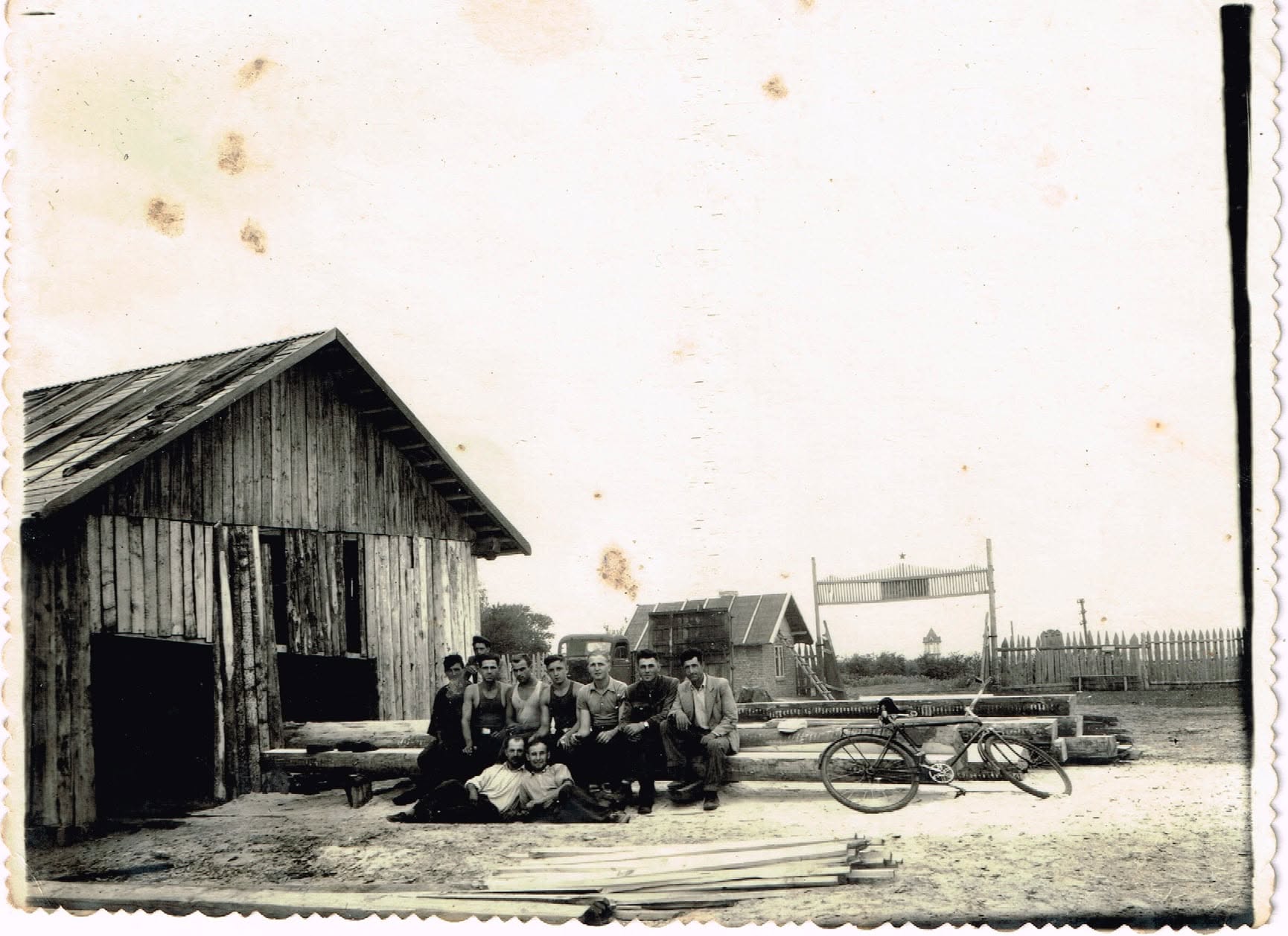
Cover Image: Photo of a sawmill on a collective farm / from the private collection of Tetyana Fedoriv