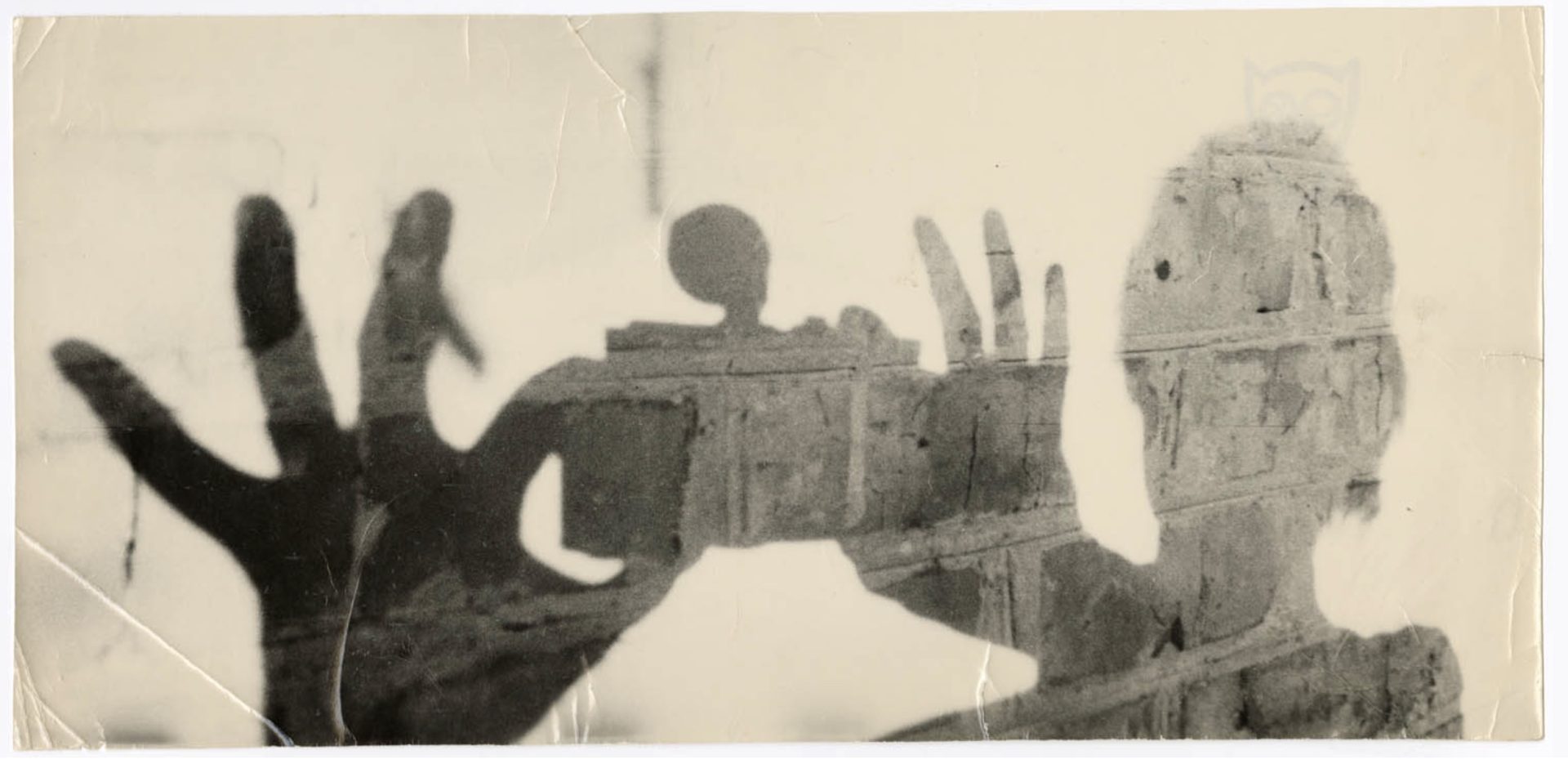
The Kharkiv School of Photography in Lithuania


Olena Chervonik
Museum of the Kharkiv School of Photography, University of Oxford17.3.2026, 18:30
Conference Room of the Center for Urban History
We invite you to the lecture by Olena Chervonik, which continues the public program, "Let’s Have a City".
The Kharkiv School of Photography is a community spanning four generations of artists who use photography as their primary means of expression. From the era of Soviet censorship through Ukraine’s independence, revolutions, and the onset of Russian military aggression, Kharkiv photographers have consistently expanded the boundaries of the medium, transforming it into a sharp tool of social and aesthetic critique.
The lecture focuses primarily on the first generation of the Kharkiv School—the informal group Vremia—and traces the genealogy of their nonconformist aesthetics. This genealogy connects Vremia to Lithuanian photographers, particularly Vitas Luckus (1943–1987), whose work the group first encountered in December 1969. By that time, Luckus had already expanded photography toward performativity, deconstructive collage, and the use of found imagery to produce open-ended visual semiosis—an unmistakable move toward the postmodern. His radical approach proved emancipatory for Vremia and deeply influenced their nonconformist practices.
By the mid-1980s, political liberaliяation and open borders prompted a new generation of curators and scholars to seek out Soviet nonconformist art. Many traveled to Moscow, where they encountered "Moscow Conceptualism," which had already absorbed artists from the peripheries, including Boris Mikhailov of Vremia. This late-Soviet narrative largely overlooked both the vibrant Kharkiv photographic community and its strong ties to Baltic nonconformist circles—connections that predated Mikhailov's pivotal encounters with Moscow painters. The lecture therefore aims to reconstruct more accurate artistic genealogies by tracing communities of genuine solidarity formed through networks of exchange, shared practices, and material evidence circulating beyond the imperial gaze of the Soviet metropolis.
An art historian and curator, she specializes in history and theory of photography and modern and contemporary art. In her current research project, Olena investigates two Ukrainian manifestations of the Worker Photography Movement (1929-1939): the photographic journal Foto dlia Vsikh, published in Kharkiv between 1928 and 1931, and the First National Exhibition of Worker Photography, held at the City Industry Museum in Lviv in 1936. Together, these two cases – a periodical and an exhibition – illustrate both the public dimensions and the regional breadth of the movement. During the residency at the Center, she plans to focus on archival materials related to the latter event.
Olena Chervonik
Museum of the Kharkiv School of Photography, University of Oxford
Credits
Cover Image: Jury Rupin, "Untitled", 1972, gelatin silver print / Collection of the Museum of the Kharkiv School of Photography