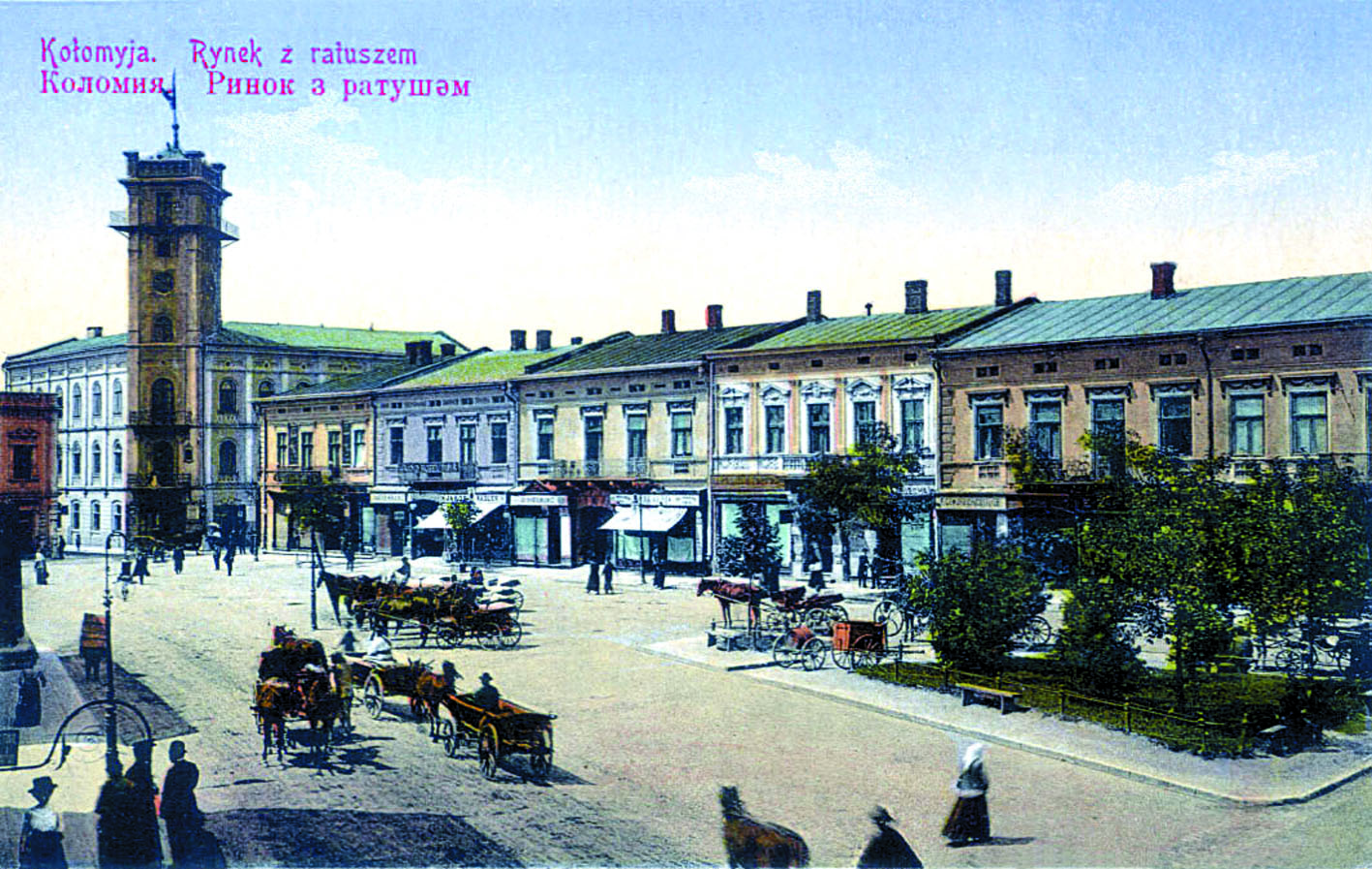
The Invention, Discovery, or Creation of Kolomyya?


Prof. Dr. Ivan Monolatii
Vasyl Stefanyk Carpathian National University30.4.2026, 18:30
Conference Room of the Center for Urban History
We invite you to the lecture by Ivan Monolatii, which continues the public program, "Let's Have a City".
Kolomyya has always been a unique city, one that has developed its own models of coexistence and interdependence among different ethnic groups and religions. If the 13th–18th centuries are spoken of as a time of invention, and the 19th–early 20th centuries as a time of discovery (or the birth of a modern city), and the years 1918–1919 as the creation of Kolomyya (or Kolomyias?), then what lies at the heart of its appeal as, in the mid-19th century, "no longer a village, but not yet a city," and, in the early 20th century, "already a city"?
Various narratives of the urban history—both black-and-white and in color—offer different answers to this overarching question. When did Kolomyya come to be understood as a city of Ukrainians in its own right, or perhaps this understanding never materialized within the chronotope under study? How should we understand Kolomyia's "long" 19th century—as a natural development within the Habsburg Monarchy or as urban autonomy with its specific civic institutions (church brotherhoods, amateur theater, schooling, publishing, political activism, etc.)? Did Kolomyya continue to be a genuine "trading hub" where East and West shook hands, and a microcosm of Greater Galicia (L. von Sacher-Masoch), or, perhaps, a city where "a Ukrainian from Kolomyya could more easily get along with a Pole from Rzeszów than with a Russian from Voronezh"?
In his lecture, the researcher will highlight how the proposed interpretations of Kolomyya in the late 19th and early 20th centuries interact, intersecting in compromises and conflicts within the urban community. They form a logical triad of relationships among the city’s population, emerging precisely at this time, highlighting the "triple" (Rusyns/Ukrainians – Jews – Poles) or "quadruple" (Rusyns/Ukrainians – Jews – Poles – Germans) urban center of the Galician Foothills. The main idea of the lecture is the emergence of Rusyn-Ukrainian Kolomyya and the formation of a community of townspeople focused on shaping a Ukrainian-speaking national identity. Among other research questions: why did the city's national communities remain "hermetic" in their interactions with "others," and why are there isolated examples of being "one of their own" within "strangers" communities? What role did Kolomyia's Poles, Jews, Germans, and Bulgarians play here? When and why did nearly every urban community embark on a path of ethnic exclusivity, partly provoking interethnic misunderstandings among residents in a city that had never been mono-ethnic until the tragedy of the Shoah? What is Kolomyya lacking today to become a city open to multi-ethnicity and effective practices of remembrance?
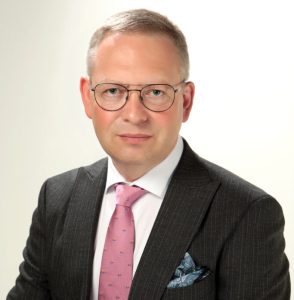
Prof. Dr. Ivan Monolatii
Vasyl Stefanyk Carpathian National UniversityHistorian, ethnopolitical scientist, head of the Department of Political Sciences at the Vasyl Stefanyk Carpathian National University in Ivano-Frankivsk, full member of the Shevchenko Scientific Society, the Ukrainian Association of Jewish Studies, and the Polish Political Science Association. Doctor of Political Science, Candidate of Historical Sciences, Professor. His research focuses on interethnic relations in Sub-Austrian Galicia and Bukovina, the politicization of ethnicities, the construction of national identities, practices of remembrance and forgetting in contemporary Ukrainian literature, and Ukrainian-Jewish studies.