Television, TV sets, and the Media City


Dr. Bohdan Shumylovych
2021 – present
Lviv emerged as a significant center for television production during the Soviet era. The transformation of the city into an industrial hub was formalized in August 1946 through the law "On the Five-Year Plan for the Reconstruction and Development of the National Economy of the Ukrainian SSR for 1946-1950." Paragraph 32 of this law outlined Lviv's conversion into a major industrial center, a vision that materialized in the subsequent years.
In 1955, Soviet authorities decided to elevate Lviv into a media hub, resulting in the establishment of a comprehensive television center equipped with a studio. The broadcasting capabilities of this facility extended over territories spanning more than 100 kilometers, solidifying Lviv's position as a prominent media hub in the western part of the UkrSSR. Furthermore, in 1956, a resolution of state agencies officially founded the Lviv Television Plant (LTP), which commenced production on October 2, 1957, with the first TV sets proudly bearing the label "Lviv." Serial production began in 1958, marking a significant milestone in the city's television history.
The subsequent years witnessed advancements, including the introduction of the enhanced "Lviv-2" model in 1959 and the development of the acclaimed "Verkhovyna" TV set in 1960, recognized as the USSR's finest during that era. Lviv TV sets gained international recognition, exported to over 30 countries since 1966. Notably, Lviv's television plant, "Electron," played a role in cultural and sporting aspects, sponsoring the Lviv football club Karpaty and owning the "Druzhba Stadium." Television and TV sets became pivotal industries, influencing various facets of post-war urban development, including the economy, culture, imagination, urban planning, education, and media infrastructure. Beyond mere infrastructure and economic impact, this research delves into the profound influence of media on the city's population and culture. Exploring the evolution of Lviv TV sets provides insights into technological progress, electronic device development, and the integration of various features.
TV sets, as cultural artifacts, reflect the values, preferences, and lifestyles of different eras. Analyzing their design, features, and marketing contributes to understanding the cultural context surrounding these devices. Soviet TV sets played a crucial role in shaping social behavior, and investigating their influence on family dynamics, social interactions, and cultural norms sheds light on the broader societal impact of media and technology.
This research focus proposes an in-depth examination of socialist television, encompassing cultural, political, and economic dimensions. Beyond infrastructure, cables, antennas, and TV sets, the study aims to unravel the extent of media influence on the city's population and culture. Investigating television's role in shaping societal norms, familial relationships, and cultural preferences contributes to a comprehensive understanding of the broader impact of media and technology on our cities. Finally, the research explores the concept of a socialist media city, examining its distinct characteristics and influence on urban culture and practices.
Related:
- Lecture by Bohdan Shumylovych as part of series "Let’s Have a City", "City and Media: Seeing, Imagining, Reading", 10.5.2023
- Lecture by Bohdan Shumylovych as part of series "Let’s Have a City", "Telegraph, Telepathy, Television: In Search of the Invisible", 18.4.2024
Credits
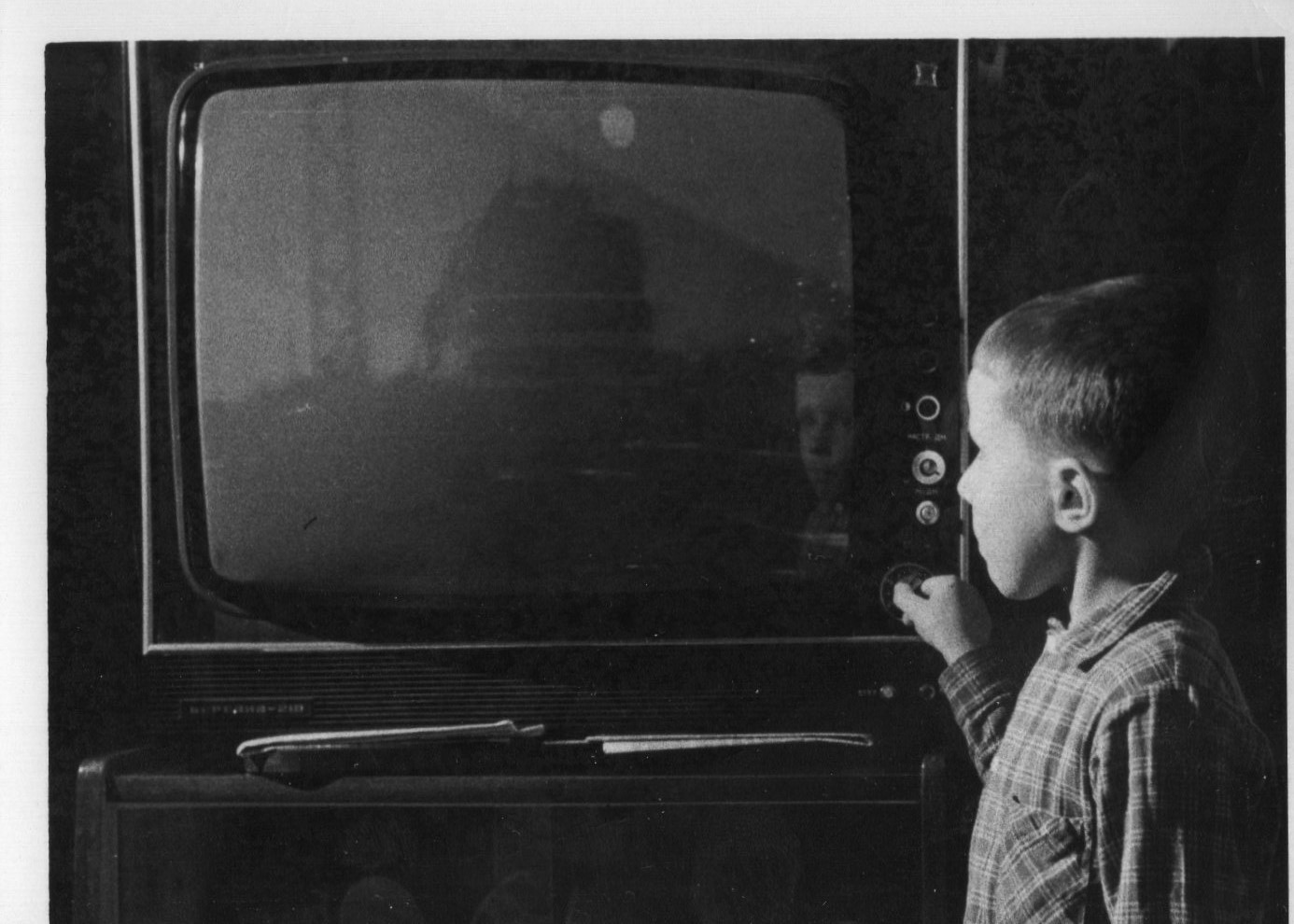
Cover Image: Bohdan Shepeliuk in front of the TV-set, 1970s / collection of Oleksii Shepeliuk / Urban Media Archive of the Center for Urban History