Methodologies of Collecting and Archiving War-Related Materials
Research Focus

Methodologies of Collecting and Archiving War-Related Materials

War documentation and archiving are closely tied to methodological reflections on the production of knowledge. Answers to the questions about how to collect materials, how to preserve them, and how to make them accessible shape the epistemic landscape that will enable certain projects in the future. From decisions about the use of specific methods, the chronology, and geography of data collection – to the completeness of metadata descriptions and the flexibility of digital solutions, this is an often invisible yet crucial aspect of academic routines that this research focus builds on. Recognizing the importance of the content of the collected data, the emphasis of scientific inquiry shifts to studying the development of research infrastructure surrounding materials of “the most documented war”.

This research focus is informed by collaborative and participatory science. Rooted in traditions of digital humanities, critical archival studies, and indigenous methodologies, it attempts to outline the contours of communities that emerge around documentation projects. It also proposes a chronology for which the collection of material is only the first stage of the work, thus offering a view of the social life of documentation projects.

Two projects constitute the core of this research focus. Taras Nazaruk offers an in-depth study of assembling the Telegram Archive, and Dr. Natalia Otrishchenko builds on her experience of conducting and preserving testimonies of war and displacement. Both works refer to the Russian full-scale invasion of Ukraine as a starting point, but they are connected to research practices before 2022. They also construct a chronology of temporal connections in which the future becomes a significant reference point.

Within this research focus, two international network projects are being implemented: "Documenting Russia's War on Ukraine" (LivArch) and "Researching the Collecting, Preserving, Analyzing, and Disclosing of Ukrainian War Testimonies" (UCORE). UCORE aims to create a digital environment for a transnational database of war testimonies and contribute to a diverse culture of memory in Ukraine. It is implemented in cooperation of the Center for Urban History with the Institute of Philosophy and Sociology of the Polish Academy of Sciences, and the Luxembourg Center for Contemporary and Digital History (C²DH). LivArch seeks to improve the methods and theories of collecting, preserving, and enriching digital sources while advancing responsible representation, publication, reuse, and long-term archiving. This is a joint initiative of the Herder Institute for East Central European Studies (Marburg), Leibniz Institute for European History (Mainz), Center for Urban History (Lviv), Luxembourg Center for Contemporary and Digital History (C²DH), Roy Rosenzweig Center for History and New Media at George Mason University (Fairfax), Darmstadt University of Applied Sciences, Marburg Center for Digital Culture and Infrastructure (MCDCI), University of Marburg, and Justus Liebig University Giessen. This research focus is also reflected in the symposium series "The Most Documented War," which the Center for Urban History has been implementing in cooperation with partners since 2023.

Credits

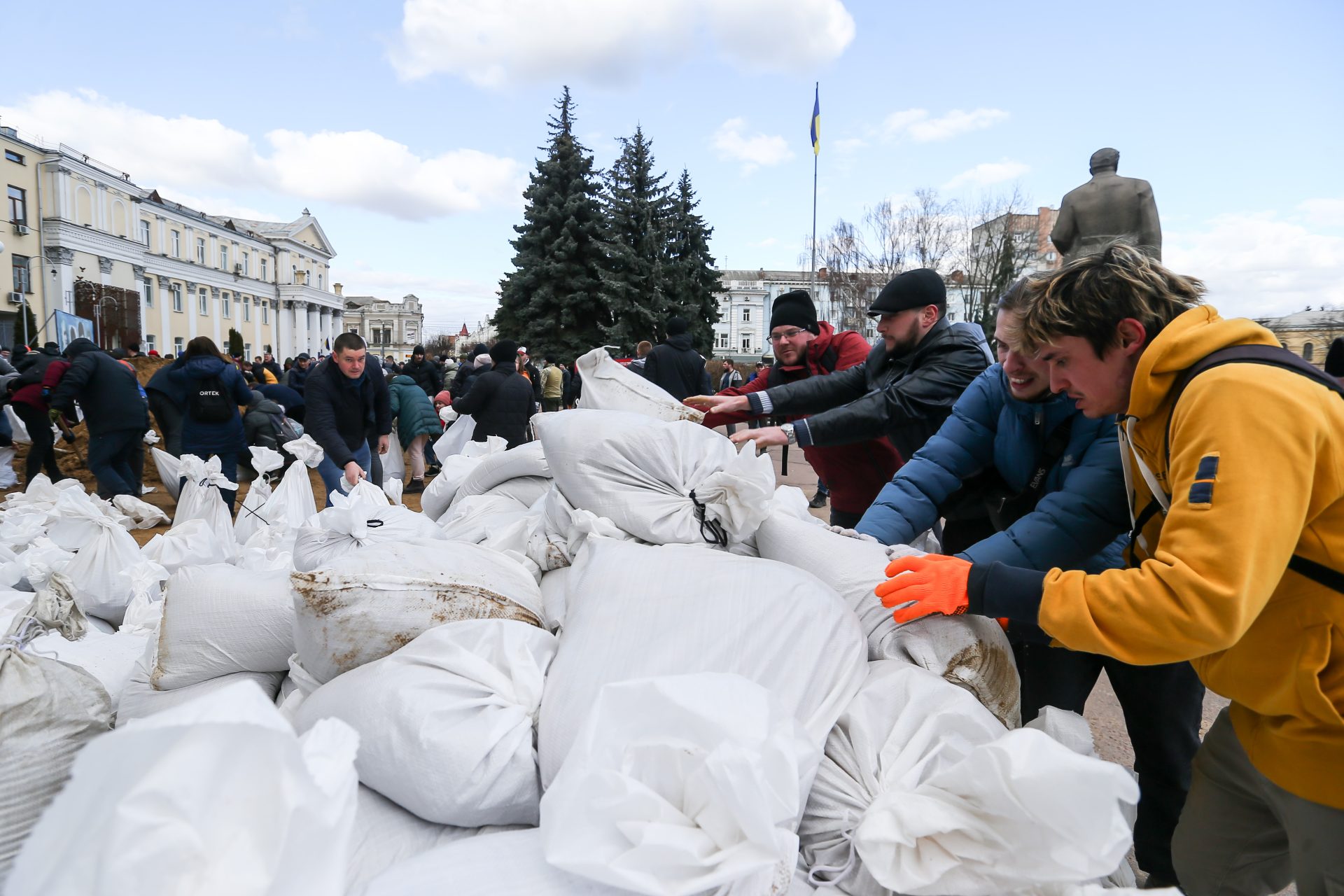
Cover Image: photo by Viacheslav Ratynskyi / Visual Documentation of War collection / Urban Media Archive of the Center for Urban History

Research Projects:


Other research focuses

Cities, Wars, and Recoveries in 20th Century Eastern Europe

Cities, Wars, and Recoveries in 20th Century Eastern Europe

This focus incorporates the history of the cities and towns in the eastern parts of Europe, both on and behind the front lines, during periods of belligerence and post-war recovery.

Details
Documenting Experiences of War

Documenting Experiences of War

We have involved our capacity and expertise to document the experiences of Russia’s full-scale invasion of Ukraine as historical and/or legal evidence, but also as a way to withstand the invasion.

Details
Historicizing Urban Media and Communicative City

Historicizing Urban Media and Communicative City

Among the main questions of the research focus are: How can an urban landscape be historicized as a media landscape? How do we see a city's past if we look at it as a mediatized communication practice, as an infrastructure of interaction? What is included, and what is left out, in our narrative of a city's past?

Details
Professionals, Expertise, and Planned Urbanity

Professionals, Expertise, and Planned Urbanity

This focus on planned cities, towns, and districts in socialist societies explores the visions of planners, experts, and decision-makers, who were all involved in the construction and experience of planned urbanity.

Details
Public History and the City: Engaging and Reflecting the Pasts

Public History and the City: Engaging and Reflecting the Pasts

This focus brings together research on the forms, formats and multiple agendas in engaging with the past from urban perspectives and in urban settings.

Details
The Social City: Histories of Mobility, Status, Gender and Welfare

The Social City: Histories of Mobility, Status, Gender and Welfare

This research focus extends the established approaches to the history of modern Lviv, centered on the history of the formation of national communities, by addressing other categories of social divisions: gender, age, class, and group.

Details
Urban Cultural Infrastructures: Creators, Managers, Audiences in the Modern City

Urban Cultural Infrastructures: Creators, Managers, Audiences in the Modern City

This research focus aims to expand our understanding of the ways infrastructures shape creative culture in the modern city.

Details
Urban Heritages: Concepts, Practices and Legacies

Urban Heritages: Concepts, Practices and Legacies

This research focus incorporates several individual projects, as well as initiatives in cooperation that analyze heritage both as a set of concepts, discourses, and practices, as well as institutional and discursive frames.

Details
Visual in/and Historical Research

Visual in/and Historical Research

Within this research focus of the Center, we implement projects in the field of visuality and archiving of visual media. We analyze the changing historical position of the observer, study the apparatuses of visual practices, and focus on the corporatization and materiality of visual culture.

Details
Visual Regimes, Materialities, and Technologies

Visual Regimes, Materialities, and Technologies

This research focus is related to visual practices and historical or social ways of seeing. Within it, we focus on the study of historical changes in technology, imagination, and politics, and how they influence the transformation of visual practices and sensibilities.

Details