Оновлення платформи "Інтерактивний Львів"


31.10.2025
Команда платформи Інтерактивний Львів презентує редизайн сайту, над яким працювала впродовж 2024 та 2025 років.
Інтерактивний Львів – цифрова енциклопедія про історію міста, яка поєднує дослідження історії Львова через мережу пов’язань між простором, людиною, інституціями та подіями. За допомоги цифрових інструментів як-от мапування ми прагнемо показати історичний контекст, що визначив сучасний Львів: його архітектурну спадщину та соціокультурну динаміку. Інтерактивний Львів сьогодні – це понад 1500 публікації – авторських статей та дослідницьких проєктів, що зосереджуються на міській історії ХІХ та ХХ століть. Вони розповідають, як в різних історичних контекстах формувалась міська тканина Львова, виникали громадські чи приватні простори, що з одного боку творили міську культуру та повсякдення, а водночас ставали місцями екстраординарних подій або ж екстремального насилля.
Паралельно з дослідженнями розвивається й цифрова інфраструктура платформи. За 18 років існування платформи, що є унікальним явищем для таких проєктів, ця інфраструктура зазнавала багатьох змін. Тривалий досвід творення Інтерактивного Львова сьогодні є важливою спадщиною як і для самого проєкту, так і для поля цифрової історії загалом.
Цьогоріч ми презентуємо нову візуальну версію сайту з метою зробити наші матеріали більш видимими для користувачів. У минулому відвідувачі сайту одразу потрапляли на нашу цифрову мапу, але у процесі масштабування наших досліджень постала необхідність створення окремої стартової сторінки для Інтерактивного Львова.
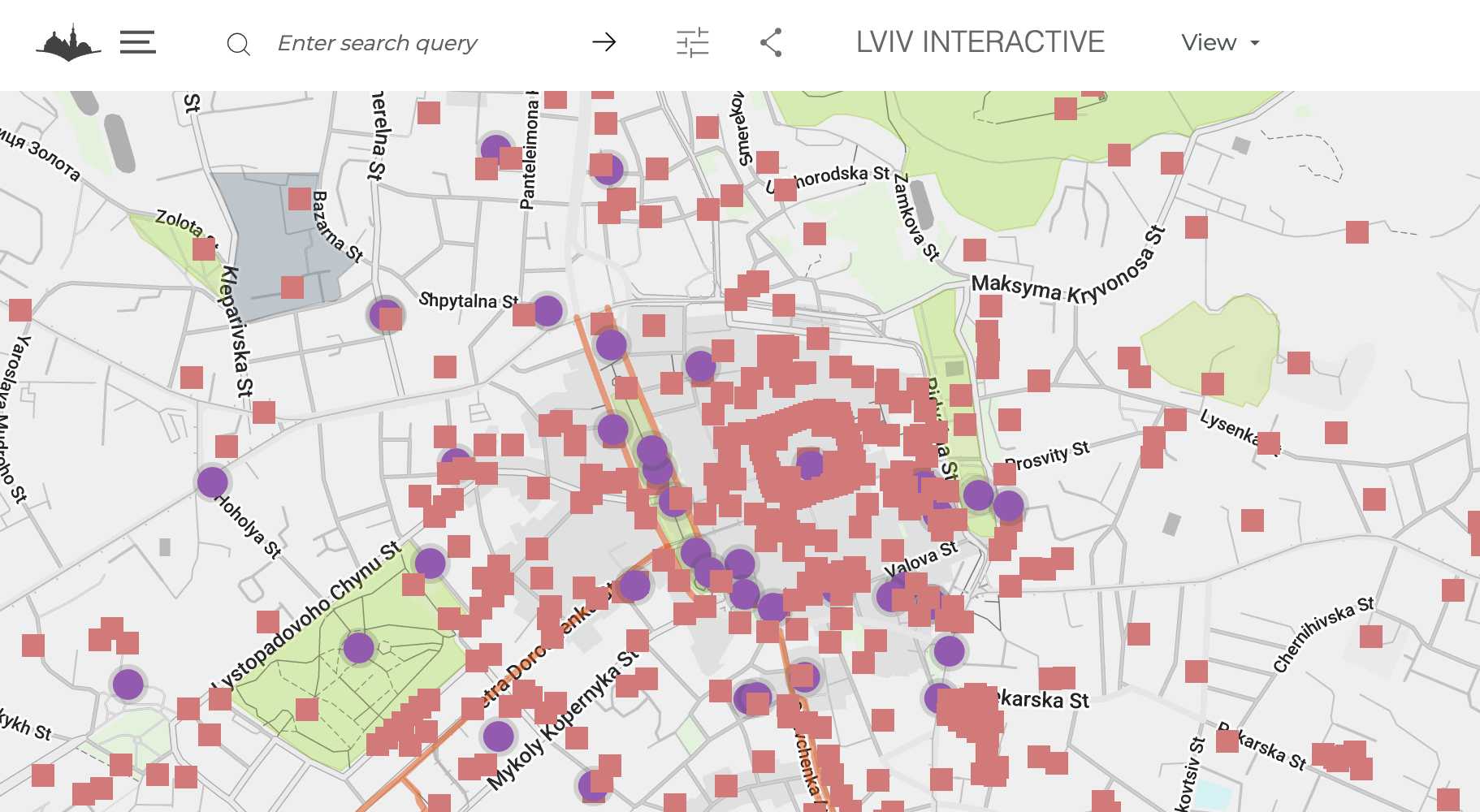
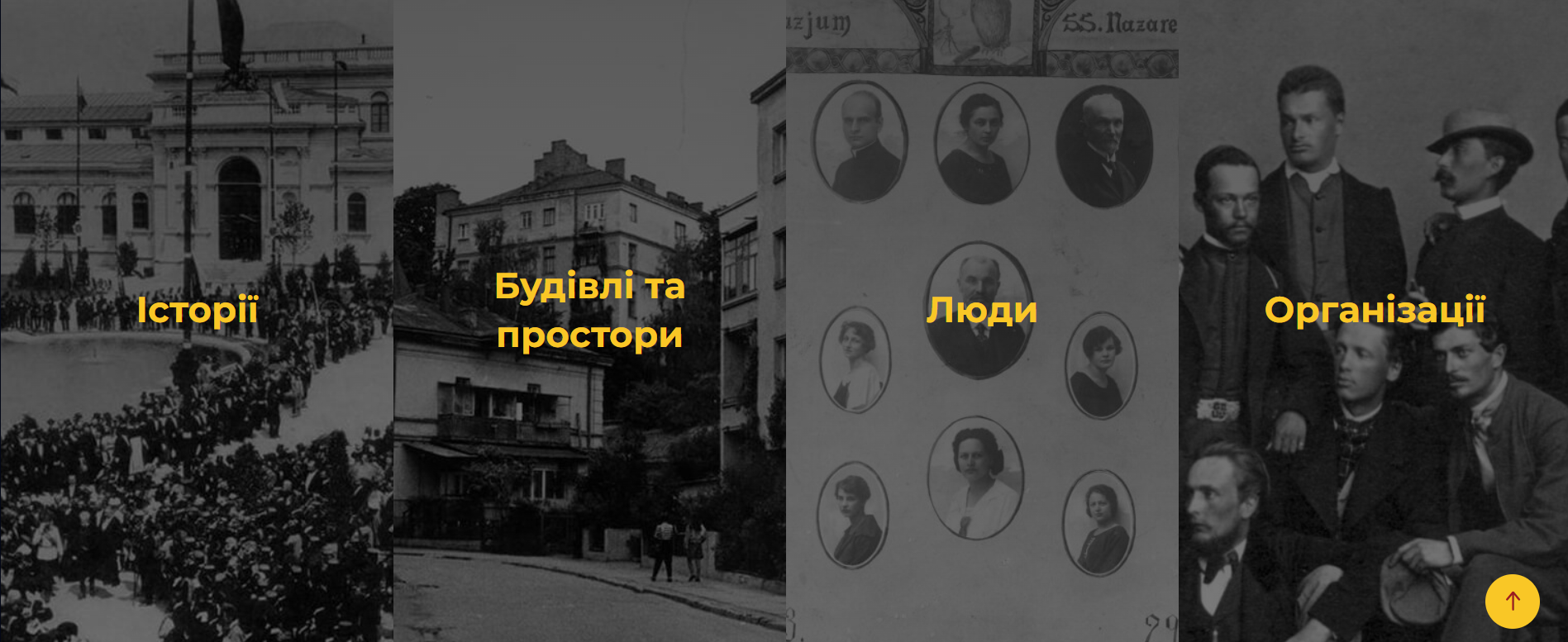
Ми виділили кілька способів роботи з матеріалами Інтерактивного Львова. Користувачі можуть переглядати статті через п'ять алфавітних списків – Історії, Прогулянки, Будівлі та простори, Люди, Організації, через цифрову мапу, а також через галерею зображень.
За допомогою пошукових запитів на цифровій мапі можна переглянути матеріали, пов'язані з конкретною темою, назвою чи локацією у місті. Окрім пошуку на карті, для кращого навігування по платформі й інших проєктів Центру міської історії у новій версії сайту ми інтегрували систему Google пошук.
Запрошуємо досліджувати!