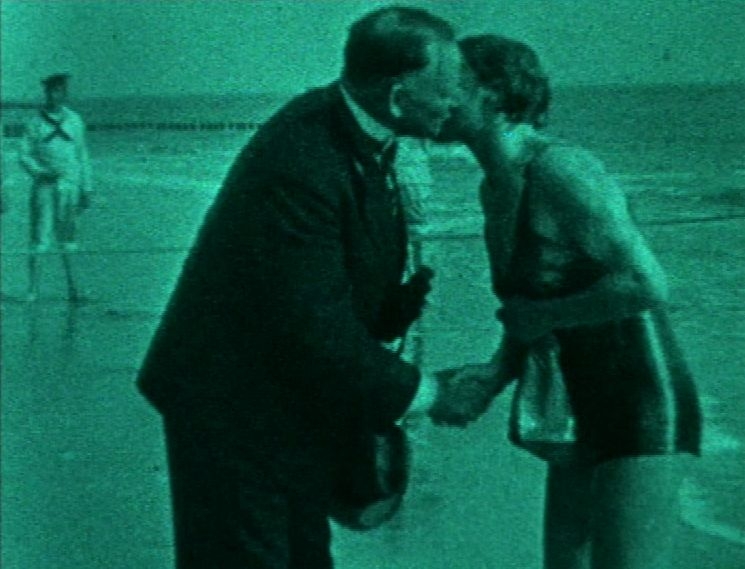
Screen Memories: History from Below in Peter Forgàcs movies


Kristian Feigelson
Sorbonne Nouvelle University15.10.2026, 15:30
Library of the Center for Urban History
We invite you to an Urban seminar with Kristian Feigelson on the intersection of memory and cinematic representations in contemporary Hungarian culture, based on the home movies of Peter Forgàcs.
After the fall of the Berlin Wall in 1989, a series of films emerged that brought issues of Jewish identity to the forefront. After 1945, this topic was taboo in Hungarian cinema, as nationalist historiography supported the official state policy of concealing responsibility for the deportation and extermination of approximately 550,000 Hungarian Jews. The relatively small number of feature films and documentaries devoted to this topic may be partly explained by the fact that the 1956 Hungarian uprising against the Soviet-Russian invasion generally overshadowed the tragedy of the deportation of Jews and the genocide in Central Europe.
During the seminar, we will screen two films by Péter Förgács—"Maelström" (1997) and "Danube Exodus" (1998)—which were created using home movies and archival footage. They do not merely represent the past in the context of the post-communist system but also revisit Europe's Jewish memory. Situated between Nazism and communism, both films critically reflect on this past within Hungarian society, which has yet to come to terms with the trauma of the Holocaust.
In the absence today of a truly independent written history, the relationship between "memory" and "history" on screen in Central Europe remains fraught with ambiguities. Key periods in Hungarian history—from 1921 to the present—bring to the fore issues related to memory.
Kristian Feigelson proposes an analysis of how, within this complex historiographical tradition, we should understand the continuity of certain forms of representation or narratives that reestablish a connection with a nationalist past, while simultaneously attempting to distance themselves from it and erase the Jewish question from historical memory.
Kristian Feigelson
Sorbonne Nouvelle UniversitySociologist and professor of Films Studies at the Sorbonne Nouvelle University. Author of various articles on Peter Forgac’s Hungarian cinema. He developed in the past a collective research program on cities and cinema, Villes cinématographiques: ciné-lieux, co-published in Théorème 10/2007 Presses Sorbonne Nouvelle. He is currently a visiting researcher at NYU and Stanford Universities, Tokyo University as part of the “Filming the Gulag” program .
Credits
Cover Image: A still-frame from the "Maelström" by Peter Forgàcs (1997) / polin.pl