Listening to Silence: Silence as a Source in Decolonial Cultural Work in the Netherlands


Dr. Gerlov van Engelenhoven
Leiden University Centre for the Arts in Society (LUCAS)29.9.2026, 18:30
online / Zoom
We invite you to the online lecture by Dr. Gerlov van Engelenhoven, which continues the public program "Source as a Choice"
Silence can be a source of knowledge and of power. That is the premise of this lecture. Through multiple real-life examples, we will reflect on the many ways this is the case.
In Dutch society, decolonial practice is imagined as rooted in speaking out (“raise your voices!”), whereas silence is understood as an obstacle to it (“break the silence!”). This logocentric approach is based on a Western understanding of socio-political engagement. However, raising one’s voice is empowering only if society is ready to listen to it, a readiness not always present in postcolonial societies like the Netherlands, especially if the voices belong to the diasporic margins. When voices are ignored, active silence can be an empowering articulation strategy, giving expression to experiences too complex to grasp in words, or providing space for processes of reflection, mourning, reverence, solidarity, and more.
Since 2024, Dr. Gerlov van Engelenhoven has studied the powerful potential of silence in a series of participatory projects and narrative interviews with 26 decolonial cultural practitioners: activists, artists of various disciplines, curators, political consultants and mediators, therapists, researchers and educators, often performing several of these roles at once. Each of these practitioners uses silence actively in their practice, in situations where words would polarize, miscommunicate or escalate conflicts further. Silence as an alternative mode of cultural work here offers the possibility to mourn, reflect, rest, support, pray, to listen to each other, and more.
During the lecture we will look at some concrete examples and insights from this project and have a discussion about the empowering potentials as well as possible risks and limitations of seeing and using silence as a source. What happens when we start to listen to silence?
The lecture will be held in English with simultaneous translation into Ukrainian.
To join the lecture, please register via the form.
An assistant professor at Leiden University Centre for the Arts in Society. His research concerns postcolonial memory and heritage, law and culture, and cultural interaction. His most recent book is Postcolonial Memory in the Netherlands: Meaningful Voices; Meaningful Silences. His methodology combines participatory research with discourse analysis and (auto)ethnography. As part of his current project, he hosts multiple episodes of the video podcast Unboxing: Uitgepakte Verhalen in collaboration with Museum Maluku, in which he discusses matters of intangible heritage with fellow members of the Moluccan postcolonial diasporic community in the Netherlands. Event moderator. Sociologist, researcher at the Center for Urban History. Alumna of the Fulbright program: in 2022–23, she conducted research at the Department of Sociology at Columbia University, USA. Visiting professor at the School of Advanced Studies in the Social Sciences in Paris (2023). Natalia is a researcher in the UNET network (2024-25). Since 2025, she has been one of the editors in the book series “Interdisziplinäre Ukrainestudien / Interdisciplinary Ukrainian Studies”, Nomos (Germany). Her academic interests include: methodology and methods of sociological research, oral history, urban sociology, sociology of expertise, and spatial and social transformations after state socialism. 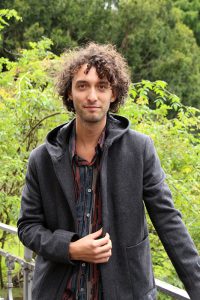
Dr. Gerlov van Engelenhoven
Leiden University Centre for the Arts in Society (LUCAS)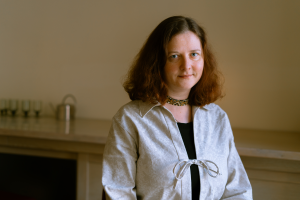
Dr. Natalia Otrishchenko
Center for Urban History
The event will take place as part of the public program "Source as a Choice" organized by the Center for Urban History in partnership with Documenting Ukraine / IWM and Research Centre Ukraine / Max Weber Foundation.
During the meetings, researchers will share their work with various sources on war and mass violence in the twentieth and twenty-first centuries. The choice to create and preserve sources can be one of the tools for embodying this violence or, on the contrary, for opposing it. Our choice to talk about these events through the prism of certain sources creates a field in which the complex past will live on in the present and future.

Credits
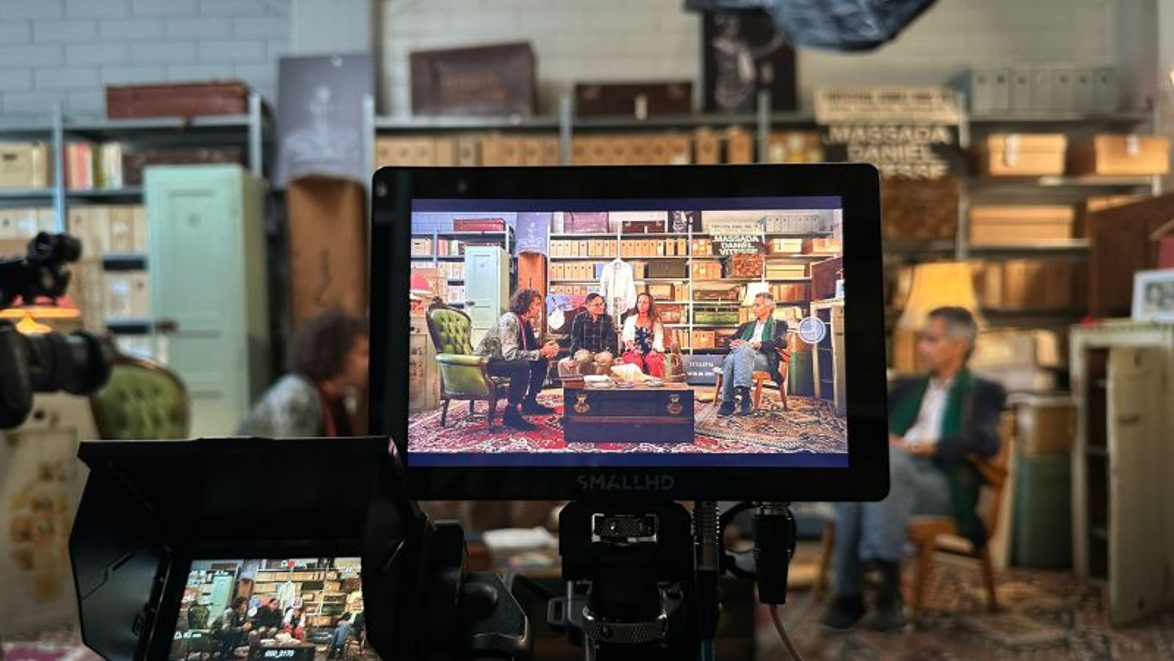
Cover Image: Behind the scenes of video podcast "Unboxing" (Museum Maluku)