The Janowska Camp: The (In)visible Space of Tragedy


23.5.2026, 11:00
In many cities that have survived wars, there are spaces that are complex in terms of their history and the (in)memory surrounding them. They are often shrouded in (un)certainty about what to do with sites of forced isolation, violence, and mass killings, which, over time, are built over, repurposed, and sometimes turned into abandoned areas.
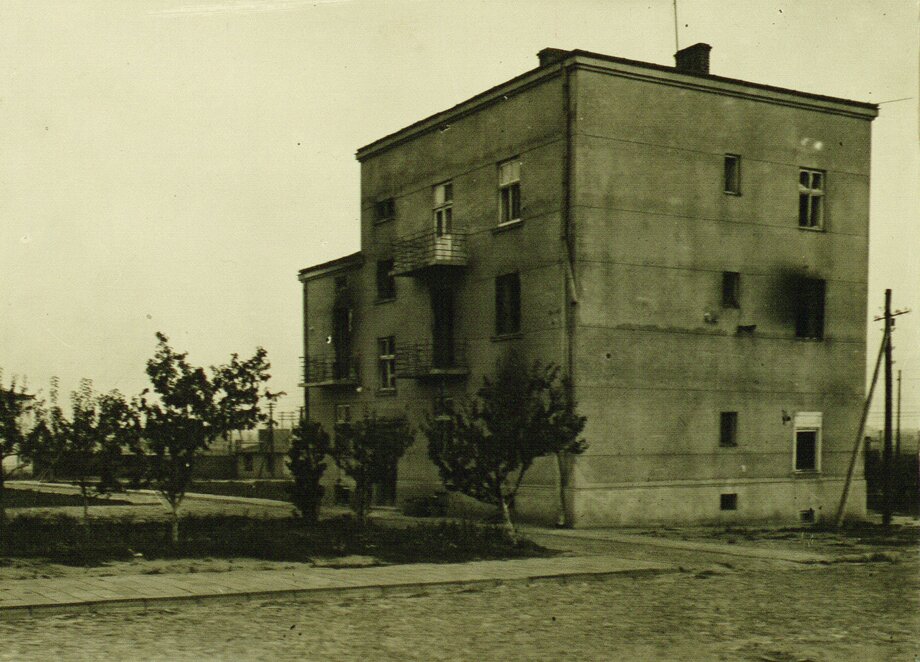
In Lviv, such a space is the site of the former Janowska сamp. Established in the fall of 1941 and liquidated in the summer of 1944 on Janowska Street (now Shevchenko Street), this camp served both as a penal labor camp and a transit camp. And although there were never any gas chambers or crematoria on the camp grounds, as in other places of forced imprisonment during the Nazi occupation, Janowska became a death camp for over 80,000 Jews.
Unlike other death camps, Janowska never became a museum; its grounds are not marked, and only a few modest memorials remind us of the tragic events that took place across this vast area. A very recent publication, the comprehensive and deeply researched book Between the Wires: the Janowska Camp and the Holocaust in Lviv by Waitman Wade Beorn, has deepened our knowledge of the camp and was crucial and helpful in preparing this walk. Yet the question of how the camp is present in public awareness of the city’s inhabitants and in a broader understanding of the history of war and occupation in Lviv and Ukraine, as well as how the story of this camp is visible in a larger narrative of European history of World War Two, remains a challenge and requires more efforts and attention.
During our walk, we will discuss the history of the Janowska camp and the surrounding area, those who ran it and those who were imprisoned there, dignity and memory, landscapes and buildings. We will try to understand the camp’s boundaries and layout, and we will reflect on its complex history, the disordered space, and us — its modern inhabitants — within it.
The walk will last about two hours.
To participate in the city walk, please register via the link. We will notify you about the location separately.
Inna Zolotar
Center for Urban HistoryCoordinator of Public History programs at the Center. She develops, accompanies, and conducts tours of Lviv and the region. Her main interest is in the “cross-trails” of different groups and societies of Galicia, their (in)visibility in space, and the history of conflicts between different communities.
The walk is part of the public program of the "REHERIT 2.0: Shared Responsibility for Common Heritage” project — "Weaving the Heritage." "REHERIT 2.0" is implemented by the Center for Urban History and the "Regional Development" Center of the PPV Economic Development Agency with financial support from the European Union.
This publication was produced with the financial support of the European Union. Its contents are the sole responsibility of the partners of the “REHERIT 2.0” project and do not necessarily reflect the views of the European Union.


Credits
Cover image: The ZAL-L administration building shortly after the camp’s liquidation / From the materials of the Soviet Extraordinary Commission for the Investigation of Nazi Crimes, 1944 / Urban Media Archive of the Center for Urban History, collection of the State Archives of Lviv Oblast