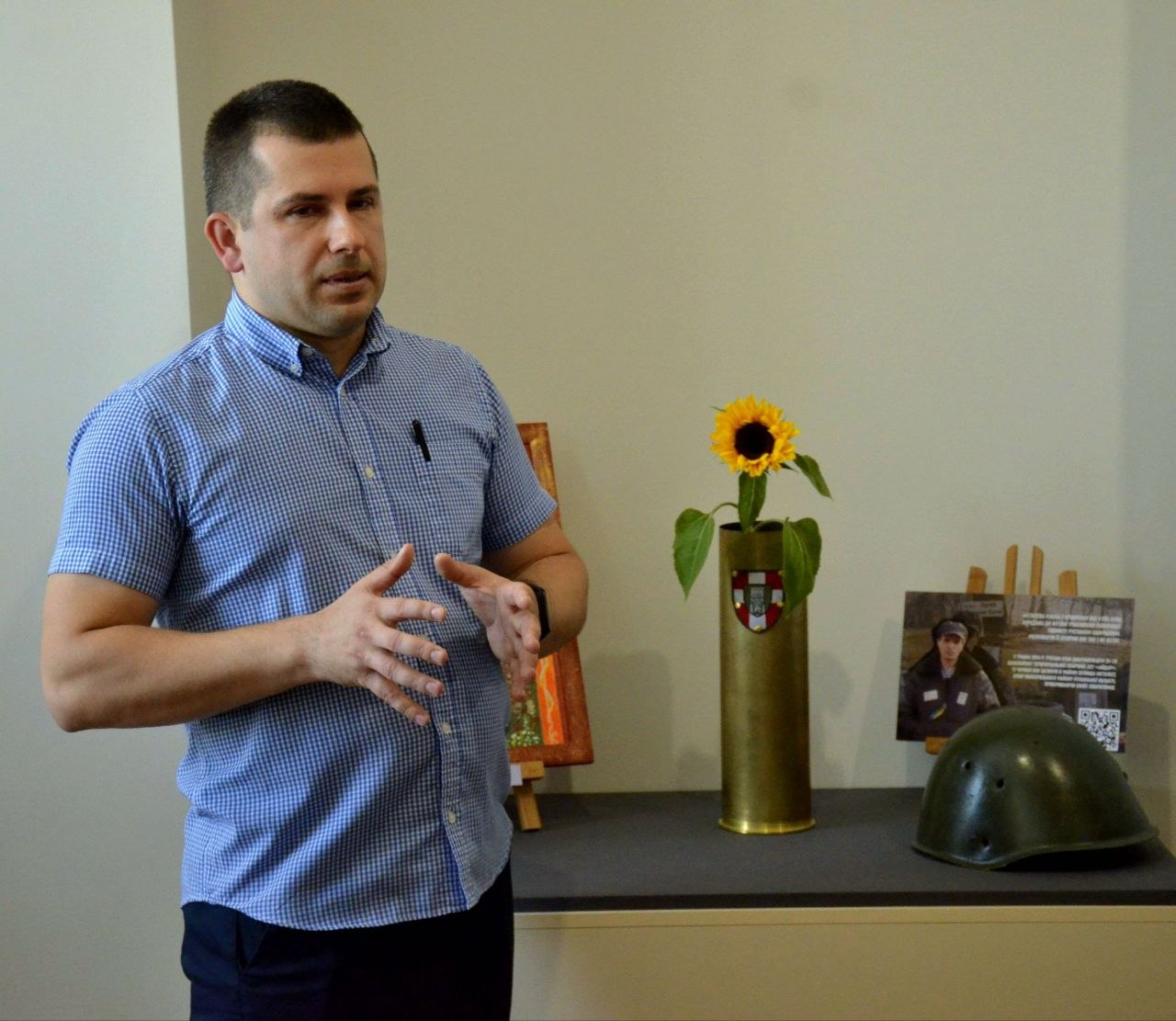
Ph.D. in History, Head of the Research and Exhibition Department of Modern Volyn History at the Volyn Regional Museum. He graduated from the History Department and completed his postgraduate studies at Lesya Ukrainka Volyn National University, where he defended his dissertation on the history of Ukraine titled "Lutsk During the Nazi Occupation (1941–1944)."
In 2015, he participated in the seminar "The Genocide of European Jews: Historical Perspective and Approaches to Study" at the House of the Wannsee Conference museum and memorial (Berlin). As a research consultant, he participated in the creation of the "Digital Atlas of the Holocaust"by the Tzal Kaplun Foundation. Recipient of the Volyn Regional Mykola Kudela Award (2019) and a fellow of the “Research in Ukraine" program (2023) from the Juliusz Mieroszewski Dialogue Center (Warsaw). During his residency at the Center for Urban History in 2025, with the support of the Foundation for Jewish Studies in Wrocław, he worked on the research project: "The Jewish Council of Lutsk: Between Community Interests and the Challenges of Nazi Occupation."
He specializes in research on World War II. As an expert in military history and a professional museum curator, he also studies the events of the Russian-Ukrainian war, acquires related artifacts for the museum’s collection, and organizes exhibitions, memorial events, and educational activities. He initiated the projects "Victories of Ukrainian Arms" and "Our Defenders" at the Volyn Regional Museum. This work resulted in the historical essay "Special Unit 'Svitiaz' in the Anti-Terrorist Operation in Donbas (2014–2018)" (Lutsk, 2019; 2nd ed., rev. and expanded. Zhytomyr, 2021) and two dozen other scholarly and popular science articles.
During the LivArch scholarship for documenting and archiving the war, she will work at the Center for Urban History on the project "The Russian-Ukrainian War in the Collections of Local Museums: Principles of Acquisition, Potential of the Source Base, and Methodology for Working with It." Conducting this monitoring study will help understand the principles by which local museums collect materials on the Russian-Ukrainian war, the nature of these materials, the level of documented information, and the future potential for utilizing this source base. This will facilitate the work of future researchers and promote productive communication among museum professionals and others.