LivArch Fellows at the Center for Urban History


29.07.2025
In July, the LivArch Fellowship Program in War Documentation and Archiving was launched. The purpose of these short-term fellowships is to jointly explore how living archives influence the methodology of historical research.
Russia's war against Ukraine is currently one of the most documented violent conflicts. Therefore, future historical research will rely heavily on a wide range of digital sources created and collected primarily through the efforts of grassroots organizations and initiatives. These include such diverse resources as social media posts, chats, videos, photographs, oral testimonies, digitized analog materials, or even geo-referenced satellite data.
Bringing together emergency documentation and archiving "today" ("living archives") and making these materials accessible to researchers and scholars, contributing to justice and commemoration, requires conceptual, legal, and ethical reflections, as well as technical infrastructure. "Living archives" require discussions about metadata standards, principles of collecting and processing sensitive data, and the development of sustainable practices for long-term archiving.
The LivArch War Documentation and Archiving Fellowship is designed to support people who create and research archives about Russia's war against Ukraine.
Among the fellows of the program:
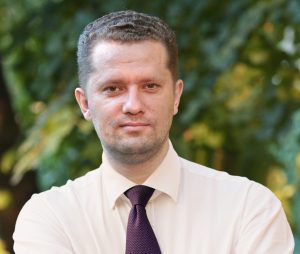
Oleh Bahmet
Institute of Geography of the National Academy of Sciences of UkraineTransformation of the Ukrainian Landscape

Albert Venger
Oles Honchar Dnipro National UniversityTestimonies of War: From Collection to Archiving in the State Archives of Ukraine.
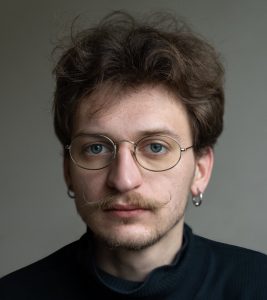
George Ivanchenko
Ukrainian photographerWarchive project, which aims to preserve memory by creating a physical and digital archive of found photographs from bombed-out residential buildings in Izium and North Saltivka in Kharkiv.
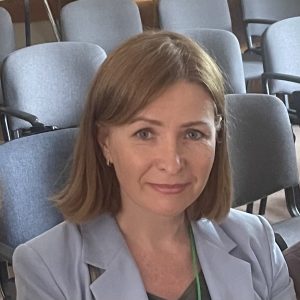
Nadiia Pastukh
Independent researcherThe Verbal Representation of the Experience of War in the Context of Typological Features of the Construction of a Narrative about the Difficult Past/Difficult Present
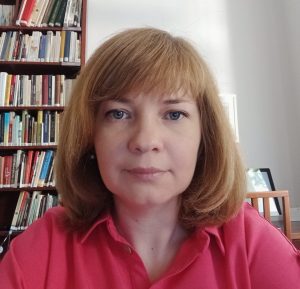
Iryna Piatnytskova
Vasyl' Stus Donetsk National UniversityDestruction of Ukraine’s Cultural Heritage in the Optics of Documentation Initiatives

Alina Rodina
NGO "Association of Relatives of Political Prisoners of the Kremlin"Returning to the Occupied Territories: Risks of Repeated Illegal Detention, Access to Information from the TOT, and the Ethics of Documenting Testimony in Digital Archives
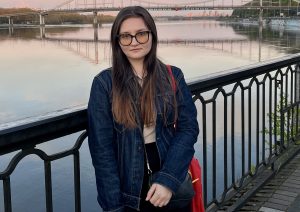
Tetiana Savchenko
Archive "Wall Evidence"Inscriptions of the Russian Military as a source of Research on the War Against Ukraine
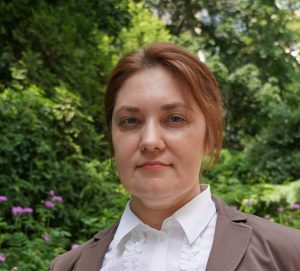
Oksana Sichova
Institute of Archival Studies of the Vernadsky National Library of UkraineArchival Classification of Sources of the Russian-Ukrainian War Documented by Private and Public Initiatives

Nadiia Skobel
Kherson State UniversityFlora of Old Cemeteries Within Right Bank Dnipro Grass Steppe District
The LivArch project promotes equal cooperation across national borders, disciplinary boundaries, traditional research, and participatory approaches through scholarships and exchange formats. LivArch is a joint project of partner organizations:
- The Herder Institute for Historical Research in East Central Europe of the Leibniz Society in Marburg, Germany;
- Leibniz Institute for European History in Mainz (Germany);
- Center for Urban History (Ukraine);
- Luxembourg Center for Contemporary and Digital History (Luxembourg);
- Marburg Center for Digital Culture and Infrastructure (Germany);
- Roy Rosenzweig Center for History and New Media (USA).
The second wave of scholarships is planned for 2026. We encourage you to follow the updates on the Center's website and social media.