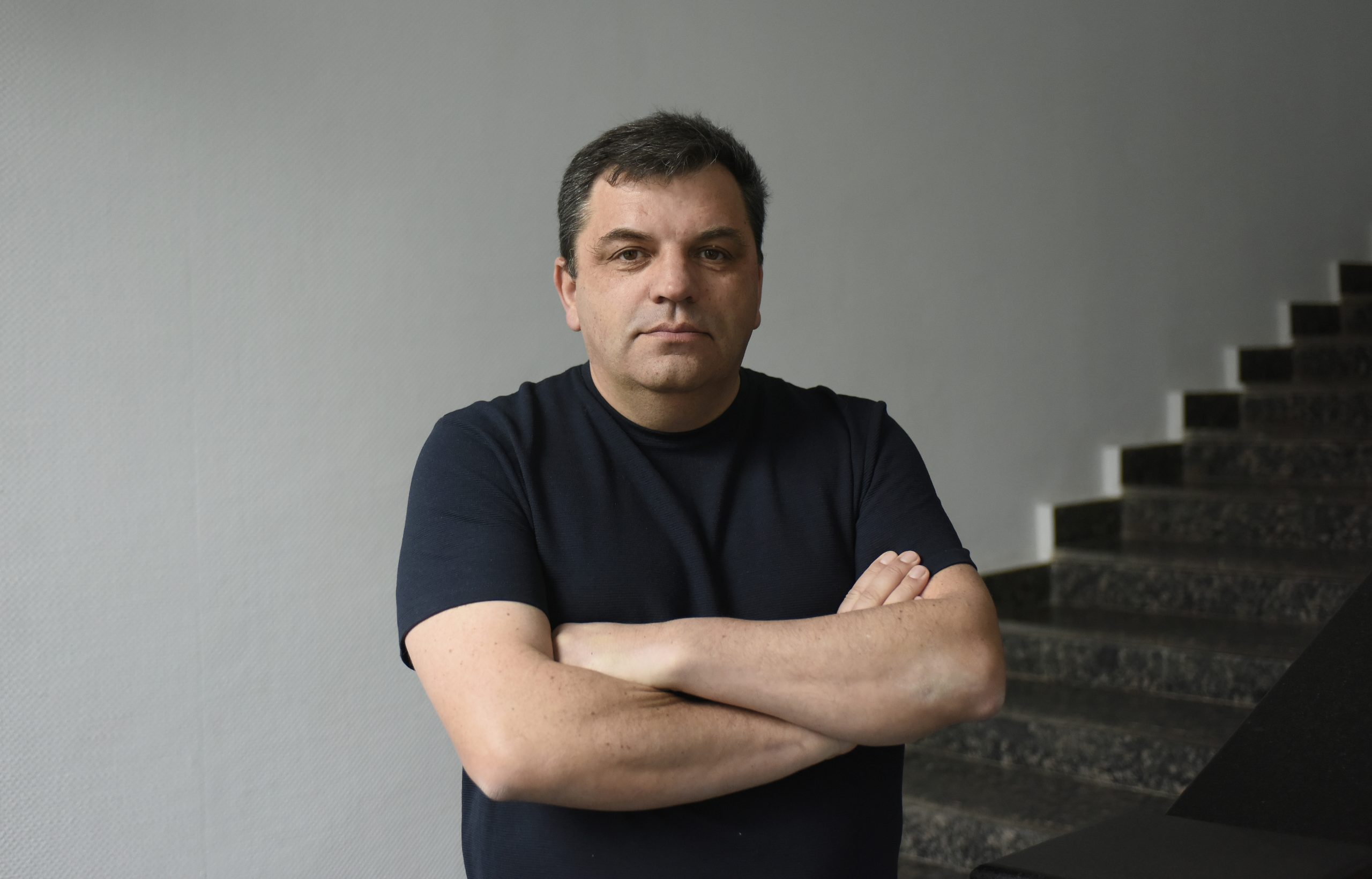
Ivan Moysiyenko
Kherson State University
- Research topic:
- The Impact of War on Cultural Heritage Sites Rich in Natural Biodiversity
- Period:
- 2026


Kherson State University
Professor, Doctor of Biological Sciences, Honored Worker of Science and Technology of Ukraine. He has been working at Kherson State University since 1996; he currently holds the position of professor in the Department of Botany. He also has experience working as a leading research fellow at several institutions: the M.G. Kholodny Institute of Botany, the F.E. Falz-Fein Askania-Nova Biosphere Reserve, and the Kamyanska Sich National Nature Park. Research interests: flora, systematics and geography of higher plants, vegetation and biotopes of southern Ukraine, plant conservation, nature reserve management, urban floristics, plant invasions, and digitization of biodiversity data.
Author of over 400 scientific publications. He devotes significant attention to nature conservation. In particular, he actively participated in the creation of the national nature parks "Oleshky Sands," "Lower Dnipro," "Dzharylgach," "Kamianska Sich," and many other protected areas. He is one of the founders and a board member of the NGO "Ukrainian Nature Conservation Group." He is the vice president of the Ukrainian Botanical Society and an honorary member of the Polish Botanical Society.
Since the start of the full-scale war, he has been compelled to actively study the war's impact on the environment. A particular focus of this research is the destruction of the Kakhovka Reservoir and the restoration of the Great Meadow in its place. He is also studying the war's impact on cultural heritage sites, which serve as vital hubs for biodiversity conservation.
As part of the LivArch scholarship for documenting and archiving the war, he will study the impact of the war on biodiversity at cultural heritage sites within the Kherson region at the Center for Urban History. In particular, he will study burial mounds and defensive ramparts, most of which are currently located in temporarily occupied territories or in the combat zone; therefore, the research will be conducted primarily using remote methods. The plan is to focus on cultural heritage sites whose flora was studied in detail before the war, which will allow for the interpretation of data on damage to cultural heritage sites in terms of potential biodiversity loss.