Visualizing Krakow Under Nazi Occupation: Digital and Analog Approaches


Paul Jaskot
Duke University29.10.2026, 17:00
online / Zoom
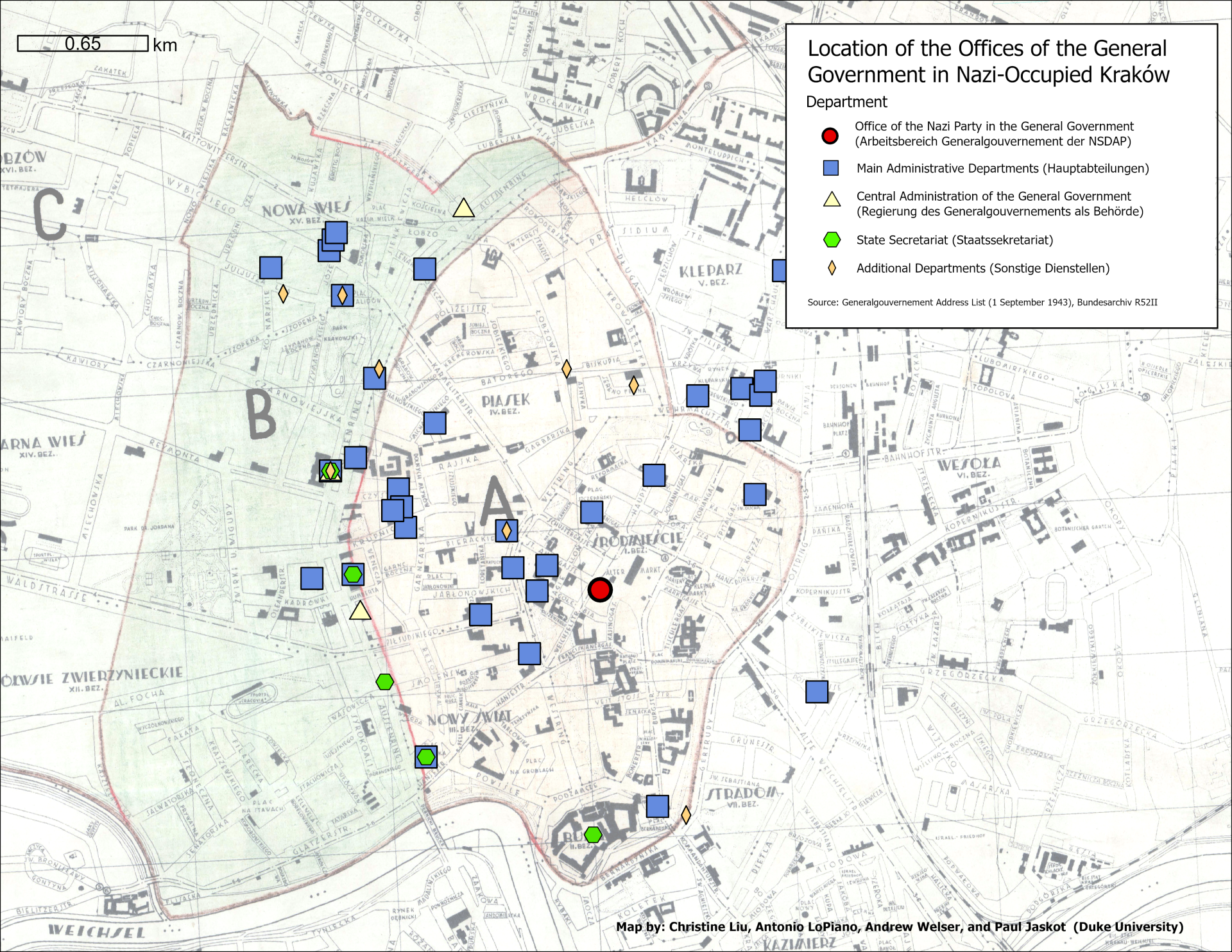
Krakow under Nazi occupation is an exceptional case study for urban analysis and digital visualization given that it was the only major site in which Nazi cultural ambition coincided with the extremes of racist antisemitic goals such as the establishment of a ghetto and a concentration camp. This talk uses building—from elite architectural plans to urban policy, from the chaos of construction sites to the most humble vernacular structures—to explore the political and cultural dynamics of genocide. Working through the physicality and construction of building gets to a more systemic history of the Holocaust.
To enable this analysis, the talk argues for an "intersecting" history of digital and analog methods and historical sources to understand the significance of the Nazi occupation of Krakow and its urban experience. For sources, intersection occurs at many levels: we have the historical intersection of the policies and lives of perpetrators with the experience and actions of victims; and we have the evidentiary intersection of distinct kinds of documents—administrative documents, diaries, building plans, photographs, testimonies, etc. For methods, digital and analog exploration of the architectural categories of construction, design, and reception will help us think through the intersection of urban sites with perpetrator policies.
With Krakow, that means looking at the goals of Generalgouvernor Hans Frank as well as the architect of the "ideal" Nazi plan for the city, Hubert Ritter, but also at how their plans intersected with Polish Jewish experience during the occupation, both of which need digital and analog approaches. The attempt is not to collapse these stories but rather to connect them, to trace the intersection of different experiences and of building conditions at different scales of analysis.
The event will be launched online. To participate in the event, please register via this form. The working language is English with simultaneous interpretation into Ukrainian.
He is the France Family Distinguished Professor of Art, Art History & Visual Studies and Professor of German Studies at Duke University. He is also the Director of the Digital Art History & Visual Culture Research Lab. His scholarship focuses on National Socialist cultural policy and its postwar impact as well as essays in Digital Art History. In addition, Jaskot is a founding member of the International Holocaust Geographies Collaborative, which has worked for over a decade to explore the possibilities of Historical GIS for the exploration of problems in Holocaust Studies. 
Paul Jaskot
Duke University
The event will take place within a series of seminars and workshops around specific cases of urban history digital platforms/projects, "Urban History Digital Infrastructures: Sharing Expertise and Networking Cities", organized by the Center for Urban History, with the support of the Center for Governance and Culture in Europe at the University of St.Gallen.