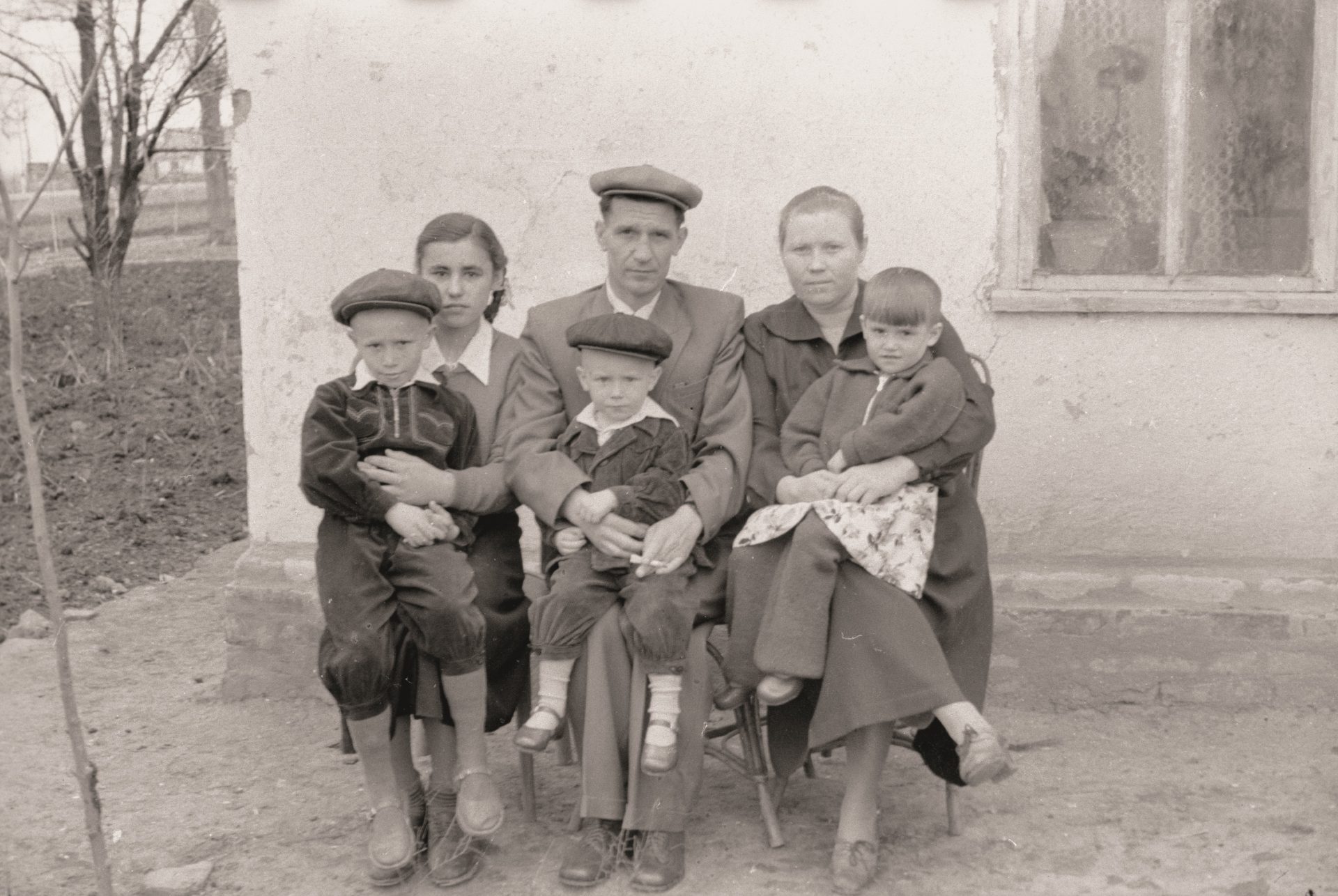
Orphaned Photographs: From Family Albums to Archival Collections


30.6.2026, 18:00
"After Silence" Public History Space, Hrebinky St., 6
We invite you to a discussion about orphaned photographs and a viewing of materials from the Urban Media Archive of the Center for Urban History and the "After Silence" archive, which we will use as examples to analyze approaches to this type of heritage.
Working with orphaned photograph collections poses a series of complex challenges for the history of photography, archival science, anthropology, and research on memory and cultural heritage. At the same time, this work cannot be avoided, especially today, amid the war, when family heritage is threatened not only by everyday circumstances but also by rocket attacks, occupation, forced displacement, and physical destruction resulting from hostilities. In such circumstances, photographs often lose their owners, and with them, knowledge of the people, places, and events they capture disappears. In particular, this marks the beginning of the process of their "orphanization."
This is precisely why private photographic collections and family archives are becoming increasingly important. Unlike state archives, which generally enjoy legal protection, secure storage conditions, and provenance records, private collections remain vulnerable to disappearance or dispersal. Yet it is these collections that preserve the experiences of people who left no written records—the majority of rural residents and a significant portion of urban dwellers, for whom keeping diaries or maintaining correspondence was not a common practice. Such photographs offer a glimpse into the lives of social groups that remained outside the major historical narratives, and they also allow us to supplement, refine, or rethink established interpretations of history.
In this sense, orphaned photographs become an important source for "history from below." However, they bear witness not only to people’s lives but also to their trajectories of existence. Orphanhood is not an inherent property of a photograph or its final state. It is a process resulting from wars, migrations, shifting borders, the breakdown of family ties, the dissolution of institutions, or the relocation of archives. Throughout their physical existence, photographs may change owners, storage locations, and modes of use multiple times, gradually losing their connection to the context of their creation.
At the same time, becoming orphaned does not necessarily mean the permanent loss of these connections. Archival practice can, at least in part, restore them by researching the photographs' origins, reconstructing their histories, creating metadata, cross-referencing with other sources, and engaging communities in identifying people, places, and events. In this sense, the archive not only preserves photographs but also participates in restoring their social and historical context.
Orphaned photographs exist on the border between knowledge and ignorance, serving simultaneously as historical evidence and material traces of losses, displacements, and ruptures in cultural memory. That is why a discussion of orphaned collections is not only a way to preserve photographic heritage but also an opportunity to better understand the historical processes that lead to the loss, forgetting, and rediscovery of the past.
The event will take place as part of the Center for Urban History’s public program [unarchiving] and the "After Silence" public program accompanying the exhibition "Field of Peace. Rural Photography."



Credits
Cover Image: photo provided by the "After Silence" team