CfA: Archiving for Uncertain Futures: Making, Using, and Preserving Collections from Within the Events


Deadline: December 15, 2026
Lviv
Archiving means valuation. The decision to create an archive within or in close proximity to events that transform the social fabric and challenge routines is often guided by the desire to preserve what is meaningful and what might be useful to various communities, or society in general, in the future.
The Oneg Shabbat archive clearly aimed to serve future historians, and the same was claimed by Journal of the Plague Year, an archive of materials about daily life during the COVID-19 pandemic. In Ukraine, amid the full-scale war with Russia, the State Archival Service has emerged as a participant in the archiving process, alongside hundreds of grassroots initiatives dedicated to preserving materials documenting the event.
Visions of what to gather and how to describe are interconnected with visions of how to use the collected materials and in what context they will live, even though these visions are not always articulated. Working within the event itself also entails dealing with immediate issues of multivocality, authenticity, contradictions, integrity, and incompleteness, and the choices made under direct political challenges would affect the possibilities for reconstructing the present (which in the future would already be the past).
We invite scholars and practitioners to think together about the practice of assembling, managing, and sustaining archives in times of rupture and about the various short- and long-term futures on which they rely. Drawing on examples from diverse geographies and chronologies, we hope to put in dialogue the widespread practice of archiving experiences of Russia's war against Ukraine. We expect applications with research papers and project case studies, both individual and collective.
During the conference, we hope to address the following questions:
- What uncertainties do archives navigate? How do they react and adjust if the political, social, or cultural circumstances change?
- What actors are behind archiving efforts? How do they coordinate their activities? What are possible tensions between them?
- What models from the past do they inherit, and how well do these models address current challenges?
- What can we learn by looking at the now-past futures of archives from previous times?
- Who holds responsibility for preservation and access to the materials, and how is it distributed?
- How does responsibility change over time?
- What is the role of sensitivity in disclosing practice? What are the risks and benefits of bringing various archival materials to the public?
- How do different visions of proximate and distant futures impact archival work during unfinished events?
- What anxieties and hopes do they produce in the present?
- How can archives contribute to future justice and reconciliation? Can they become sites of struggle for recognition and tools of persecution?
- What is the role of emotional proximity and distance in archiving? How do they impact our vision of what to preserve and how to disclose?
- What does it mean to have sustainable archival infrastructures? What is the space for its flexibility?
The event is part of the LivArch network activities and is designed in a dialogue with a conference at the Herder Institute, "Archiving on the Edge: The Digital Lives of Collections from Wars and Emergencies." Participants are also invited to continue the discussion at the Marburg Conference. While participation in both conferences is welcome, applications for the Lviv Conference will be considered independently.
Researchers may apply for:
- Lviv only, April 1-2, 2027 (link to the form)
- Marburg only, April 27–29, 2027 (link to the Herder Institute page)
- Both conferences require a separate application for each event
Submissions should be sent via the forms by December 15, 2026. Notifications regarding conference participation will be sent by the end of January 2027.
The conference's working languages are English and Ukrainian (with simultaneous translation).
The organizers will cover travel and accommodation expenses for all participants who are not funded by their institutions.
Program committee for the Lviv conference:
- Natalia Otrishchenko, Center for Urban History
- Iryna Sklokina, Center for Urban History
- Katherine Younger, University of Glasgow
in collaboration with:
- Simon Donig, Herder Institute
- Ian Kisil Marino, Federal University of Juiz de Fora / Leibniz Institute of European History
- Tabitha Redepenning, Herder Institute
Conferences in Lviv and Marburg are connected to a planned edited volume, "Archiving on the edge: The lives of collections from wars and emergencies". Several prospective contributors to the volume are expected to present their work at the conference. At the same time, participation in the conference is independent of publication in the edited volume and does not in itself entail an invitation to contribute. The editors nevertheless hope to draw on the discussions and insights emerging from the conference and may invite selected participants to further develop their work for inclusion in the volume.
LivArch
Leibniz Collaborative Excellence project involving the Herder Institute for Historical Research on East Central Europe, Leibniz Institute of European History (IEG) in Mainz, Center for Urban History, Lviv, Luxembourg Center for Contemporary and Digital History (C2DH), Marburg Center for Digital Culture and Infrastructure (MCDCI) at University of Marburg, Darmstadt University of Applied Sciences, and the Giessen Center for Eastern Europe (GiZo) at Justus Liebig University Giessen.








Credits
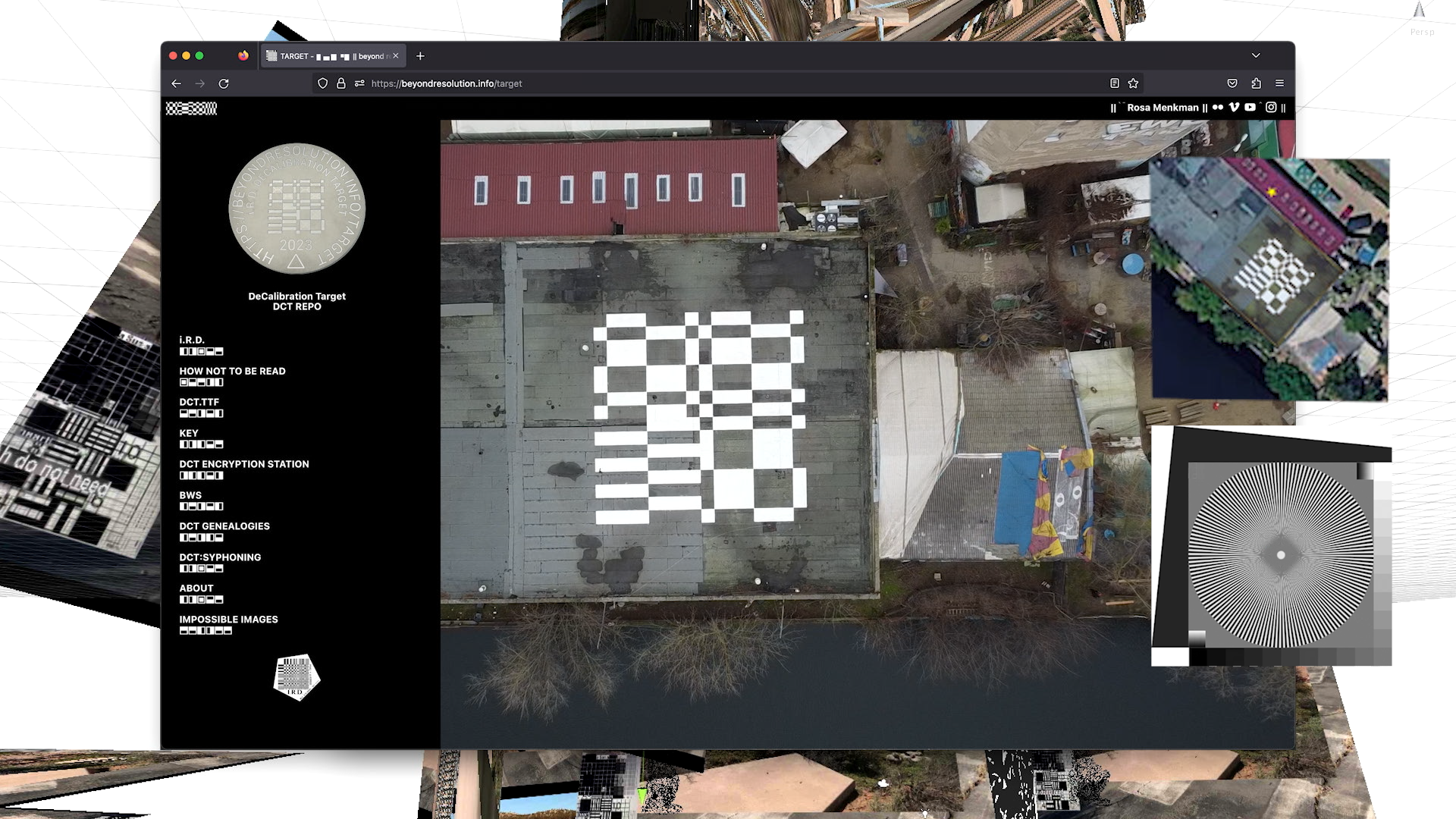
Cover Image: Rosa Menkman / 7_DECALIBRATION_TARGETDESTITUTE_VISION.00_33_08_00.Still012 / Source