Hospitable Sea, Hostile Shores? Disentangling Histories of Connections and Conflicts in the Black Sea Region


14.5.2026
Orient-Institut Istanbul, Istanbul
Oceans, seas, rivers, and other big bodies of water have been taking central stage in recent attempts to reimagine histories of different world regions as parts of the same global story of mobility, connections, and entanglements. Although traditionally overshadowed by the Mediterranean, the Black Sea has also begun to attract scholarly attention. A growing number of studies examine themes of empire, slavery, trade, material culture, and environment with the Black Sea at the heart of their geographic and historiographic frameworks. Apart from Russia's annexation of Crimea in 2014 and its ongoing war of aggression against Ukraine, this interest has been driven by the post-national and trans-imperial turns in historiography.
The Black Sea was never just a site of imperial rivalry or security concerns, as it is often portrayed in the media and many scholarly works today. While the sea overwhelms individual men and women, it is their personal and collective experiences that make up its history. For this workshop, we ask our participants to share their primary source(s) that illustrate the complexity of the Black Sea region and highlight perspectives of individuals, communities, and minorities caught up in the economic, environmental, and imperial crosscurrents of this strategic body of water from the seventeenth through the early twentieth century.
We want to explore this region as a place of entanglements that enabled close contact between vastly different societies and cultures, alongside such phenomena as war, slavery, and colonialism. We hope that a day of open, collegial discussions across diverse research areas and methodological approaches will be intellectually stimulating and foster new connections between the research networks that may not often intersect. Our source-oriented approach is driven by the desire to contribute to the development of a digital compendium of open educational materials for teaching the region in the future.
This one-day, practical-oriented workshop aims to bridge research and educational agendas by inviting scholars to share their primary sources which can be used for university teaching, while also invigorating methodological discussions centered around the specificity of chosen sources. We ask our participants to prepare a short 20-minute presentation on selected primary source(s), which reflect on the perspectives outlined in this description. It can be one source or several. The materials from all the participants will be made available beforehand so that we can prepare for a fruitful discussion.
The workshop is a part of the ongoing programs of the two institutions:
- "REESOURCES: Rethinking Eastern Europe" educational platform of the Center for Urban History, in particular, the project "Digital Resources for Teaching the Black Sea Region" supported by the Center for Governance and Culture in Europe at the University of St. Gallen.
- "Rethinking Areas: Black Sea Region" research area at the Research Centre Ukraine / Max Weber Foundation funded by the German Federal Ministry of Research, Technology and Space (BMFTR).
REESOURCES offers resources designed to decentralize curricula on the history of Eastern Europe by diversifying the sources used in teaching, to spark discussions about established metanarratives, and to foster new approaches to teaching and studying the region. The platform is based on the principles of open access, historical inclusivity (incorporating peripheral and marginalized experiences), and critical engagement with sources. These three concepts form the foundation of the project: creating opportunities to uncover history, explore it, and make educational materials accessible to diverse audiences and communities.
Сo-orginizers:
- Center for Urban History (Lviv, Ukraine)
- Research Centre Ukraine / Max Weber Foundation (Lviv, Ukraine)
- Orient-Institut Istanbul / Max Weber Foundation (Istanbul, Turkey)
- Center for Russian, Caucasian, Eastern European, and Central Asian Studies (Paris, France)
- Center for Governance and Culture in Europe, University of St. Gallen (St. Gallen, Switzerland)

Credits
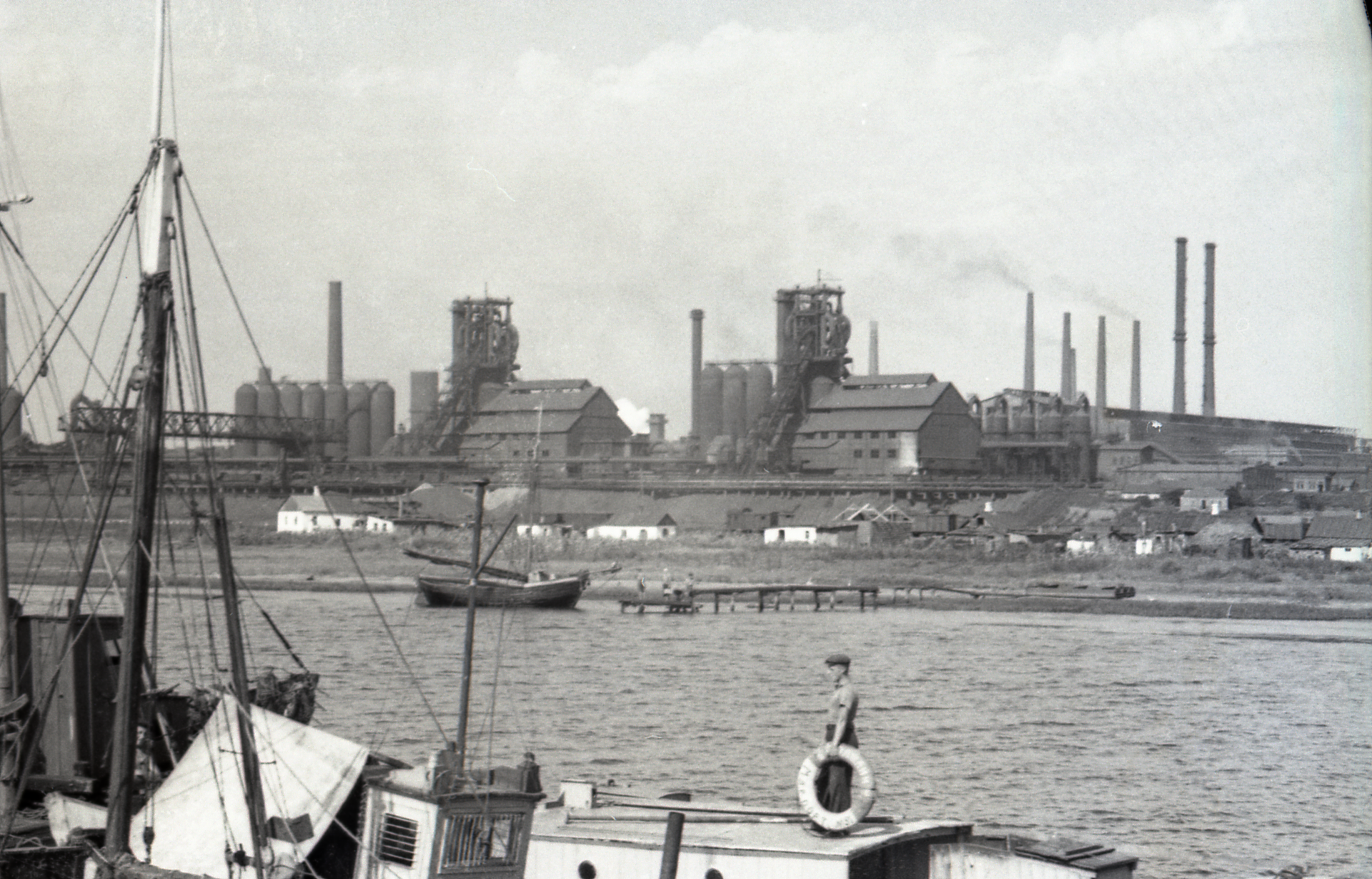
Cover Image: Azovstal from the port, Mariupol, 1947 / photo by Pavlo Kashkel / Mariupol Museum of Local History collection / Urban Media Archive of the Center for Urban History