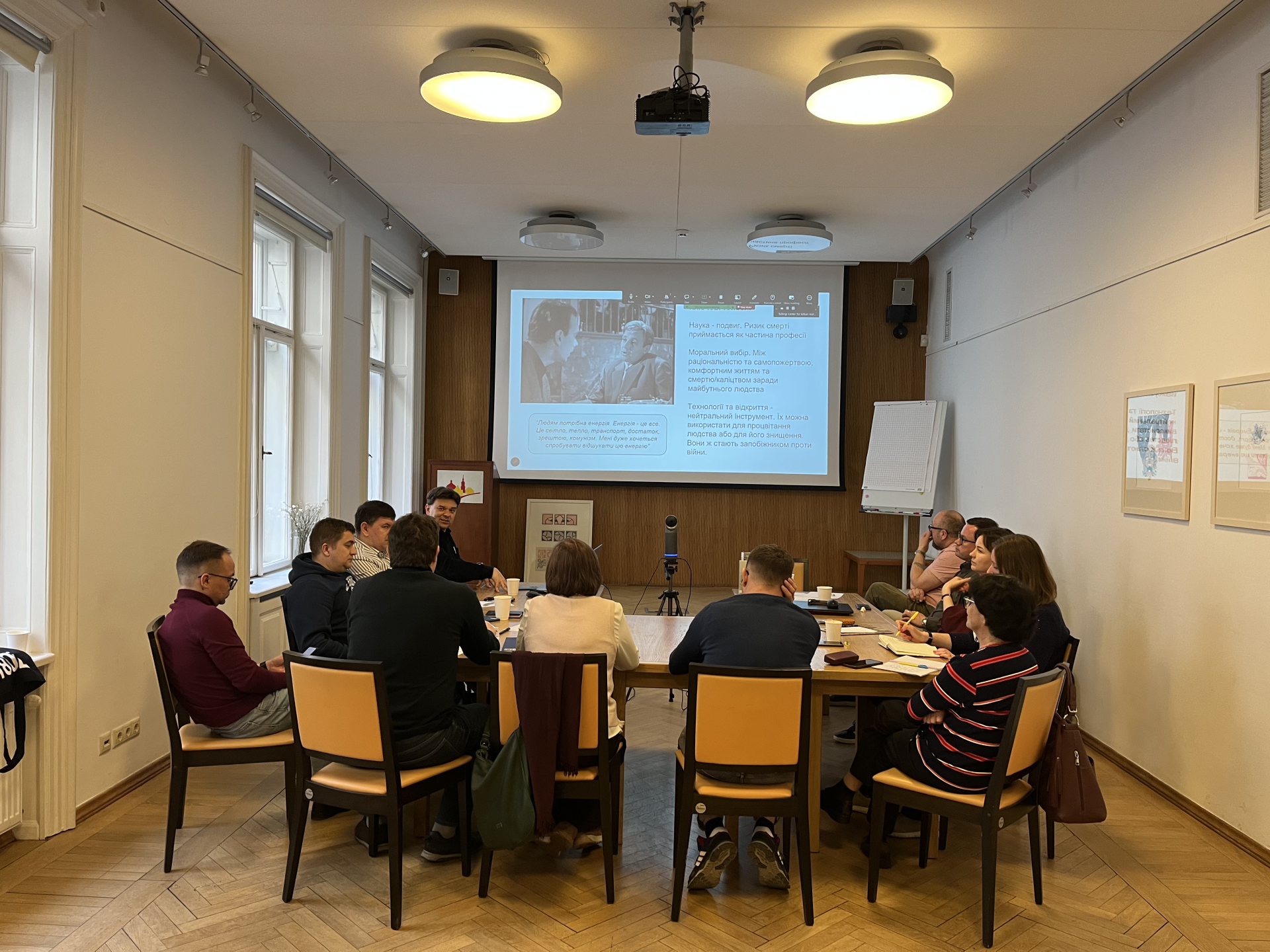
Educational Workshops of the "Understanding Modernity" Series


08.04.2026
Since the beginning of 2026, two of the six planned workshops in the series long-term series "Understanding Modernity"; this year's series is dedicated to methodological challenges in teaching Soviet history through the lens of the Ukrainian experience.
The aim of the series is to create a space for critical discussion and rethinking the teaching of "Soviet" and "socialist" as historical periods, experiences, ideologies, and complexes of political, economic, and cultural practices. The series will combine interdisciplinary discussion with the development of practical teaching materials. The final outcome will be a comprehensive syllabus and a set of educational resources (primary sources, modules, teaching materials) prepared by the participants, which will be made available for public use on the educational platform REESOURCES.
The curators of the series are Bohdan Shumylovych (Ukrainian Catholic University) and Roman Lyubavsky (V. N. Karazin Kharkiv National University).
Participants:
- Viktor Drozdov (Izmail State University of Humanities)
- Albert Venger (Oles Honchar Dnipro National University)
- Oleh Razygrayev (Lesya Ukrainka Volyn National University)
- Gennadiy Kazakevych (Taras Shevchenko National University of Kyiv)
- Pavlo Leno (Uzhhorod National University)
- Yevhen Zakharchenko (V. N. Karazin Kharkiv National University)
- Viktoria Vengerska (Ivan Franko State University of Zhytomyr)
- Roman Lyubavsky (V. N. Karazin Kharkiv National University)
- Olga Kolyastruk (Mykhailo Kotsyubynsky Vinnytsia State Pedagogical University)
- Yulia Kravchenko (Kyiv-Mohyla Academy)
- Bogdan Shumylovych (Ukrainian Catholic University)
- Inna Chernikova (H. S. Skovoroda Kharkiv National Pedagogical University)
- Oleksandr Bezarov (Yuriy Fedkovych Chernivtsi National University)
As part of the first workshop, on February 28, a City Walk by Inna Zolotar took place on the topic "Lviv in 1939."
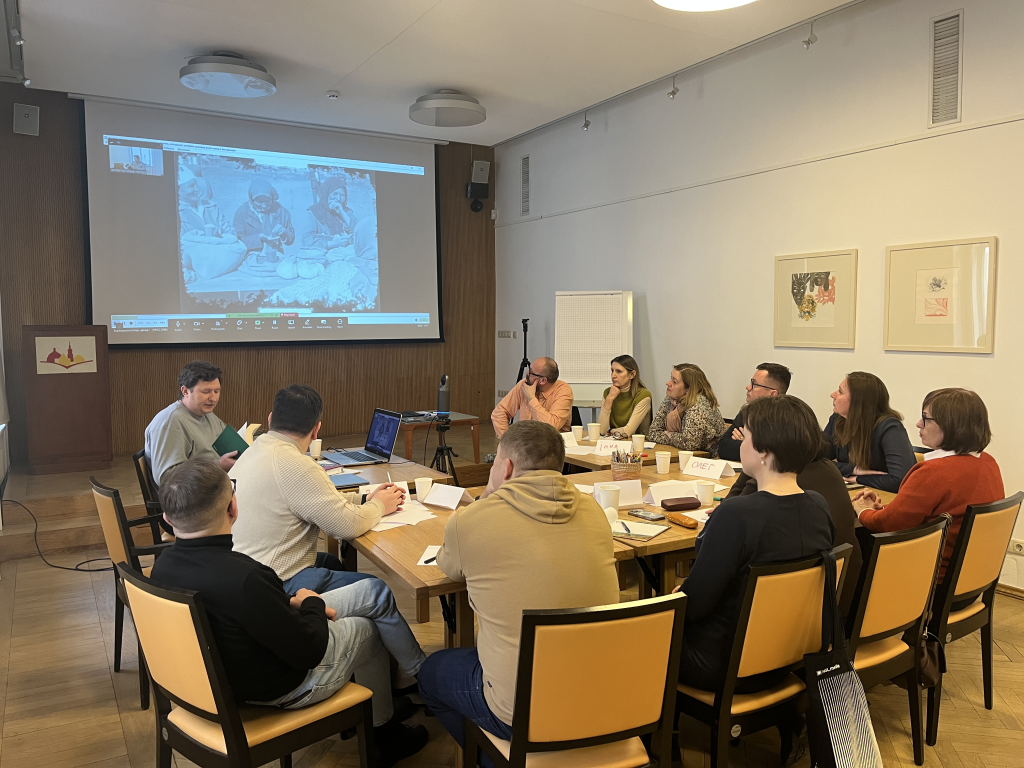
Presentation by Albert Venger
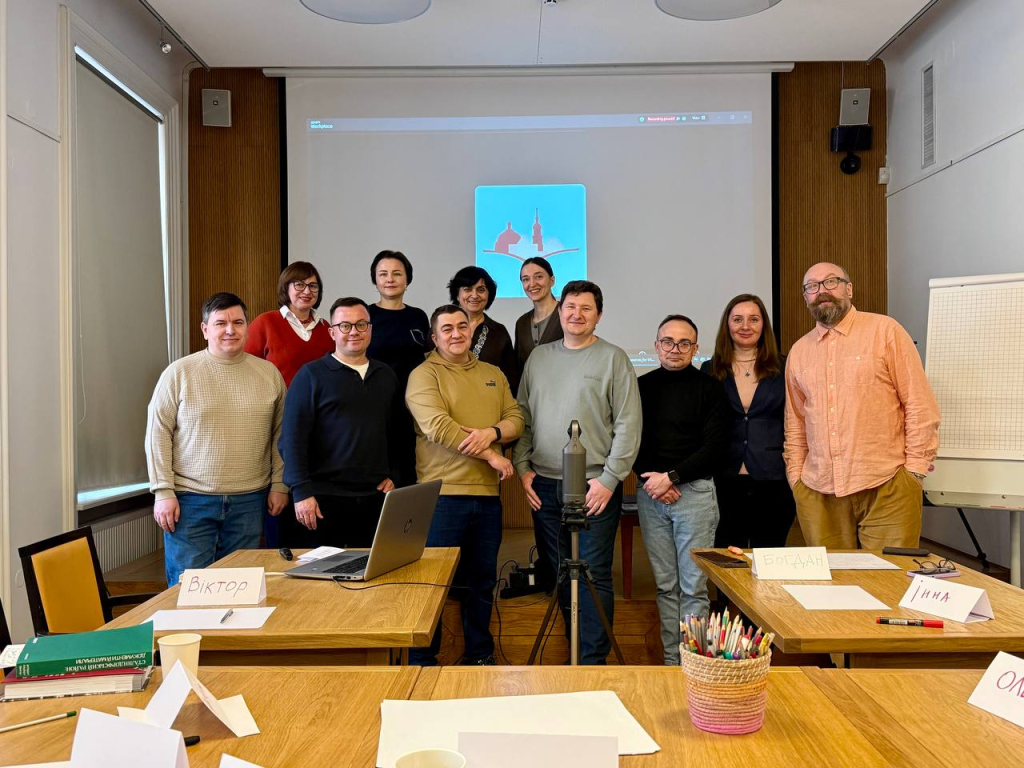
Working group during the workshop
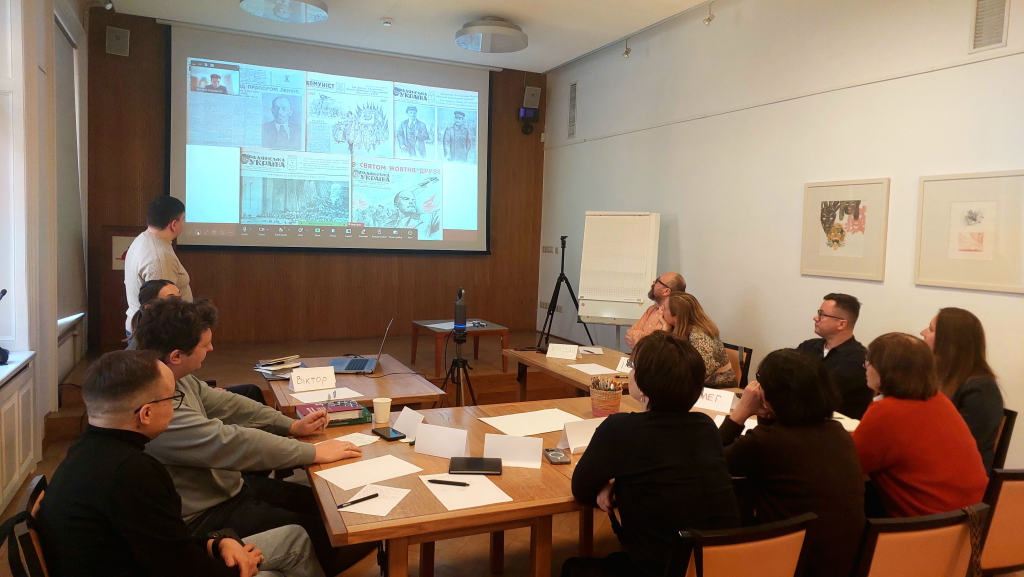
Presentation by Roman Lyubavsky
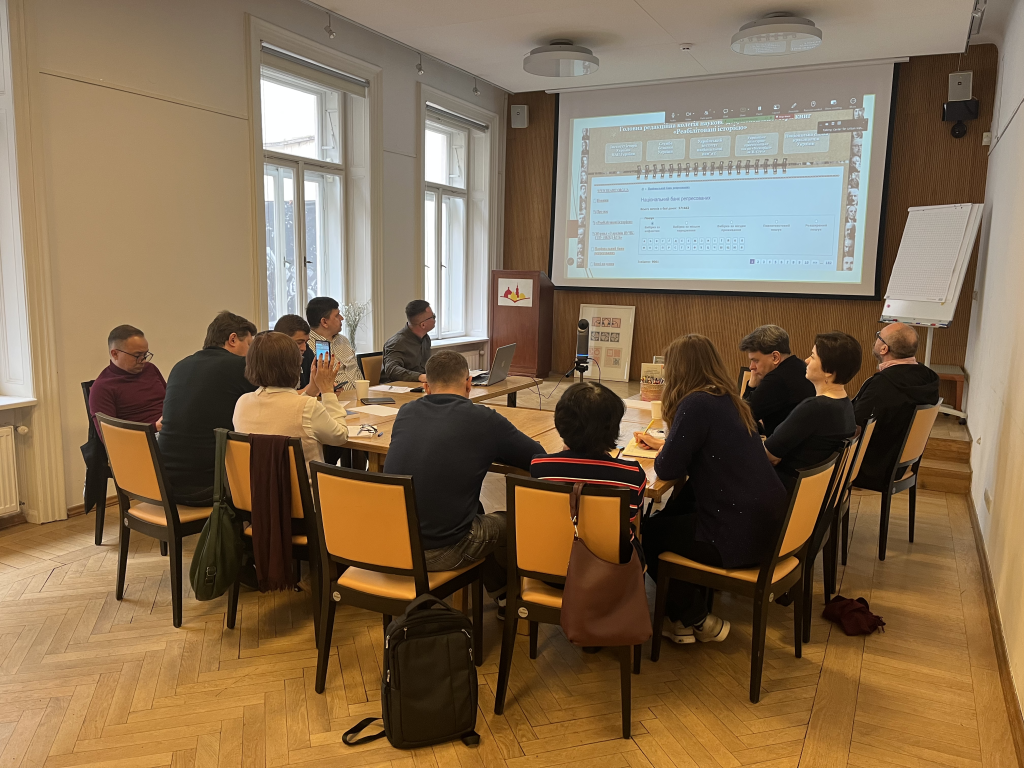
Presentation by Yevhen Zakharchenko
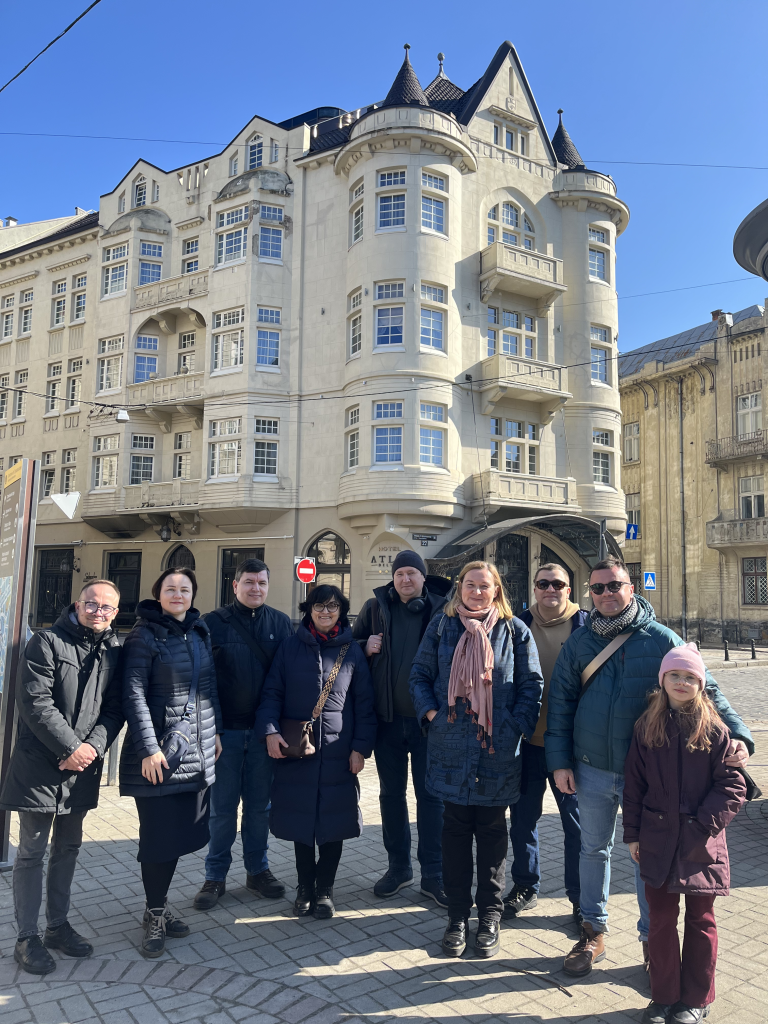
City Walk with Inna Zolotar on February 28
The series "Understanding Modernity" focuses on the question of how to teach and explain the complex, contradictory, and multidimensional processes of historical transformation over the past two centuries: the rise and fall of empires, the formation of nation-states, the causes and logic of large-scale wars, the differences between modernization projects, the specifics of socialist experiments, and the enduring nature of their legacies.
The series of workshops is organized by the Center for Urban History in partnership with V. N. Karazin Kharkiv National University, Uzhhorod National University, O. Honchar Dnipro National University, Ukrainian Catholic University, Izmail State Humanitarian University, Y. Fedkovych Chernivtsi National University, Vinnytsia Mykhailo Kotsiubynskyi State Pedagogical University, Taras Shevchenko National University of Kyiv.
Credits
Cover Image and gallery: Ivanna Cherchovych