
Reading in Times of AI: What lies ahead?


A conversation with Klaus Benesch and Yaroslav Prytula. Moderators: Daria Badior and Natalie Nougayrède
16.3.2026, 18:30
Conference Room of the Center for Urban History
A lot is being written these days about the decline of reading and the deterioration of reading comprehension skills. However, this is a good time to reflect on what we actually mean by reading itself. Is it only reading from paper, and therefore, reading books? Can scrolling be considered a new practice of reading? Are listening to audiobooks, podcasts, and texts read by AI also forms of reading?
Essayists and intellectuals are trying to analyze why the number of regular book readers is steadily decreasing. Yet, depending on how we define reading, the number of readers and the hours spent reading may vary.
In this moment of uncertainty, we can look to the past and consider how technology has radically changed practices of storytelling and perception: from the invention of the printing press to the invention of sound and video recording; from radio and television to the personal computer and smartphone. With the rapid integration of artificial intelligence into our daily routines, as well as our private and professional lives, we are once again re-evaluating our practices and concepts of reading.
Is what we are witnessing a decline? And is the development of artificial intelligence and large language models to blame? How are we affected by social media algorithms and the flickering of screens that we are constantly surrounded by? Ultimately, what is the future of the written word and of reading, which has already weathered more than one crisis?
We will discuss this with Klaus Benesch, Professor of American Studies at the University of Munich, author of the book The Myth of Reading, and Yaroslav Prytula, Founding Dean of the Faculty of Applied Sciences at the Ukrainian Catholic University. The conversation will be moderated by editors of the re/visions journal, Daria Badior and Natalie Nougayrède.
Про учасників розмови

Klaus Benesch
Professor of English and American Studies at the University of MunichHe is director of the Bavarian American Academy. His research interests include American literary and cultural history; architecture, urbanism, and the history of technology; mass media and cultural theory. His 2021 book The Myth of Reading: Book Culture and the Humanities in the Information Age examines the impact of technological shifts on reading.
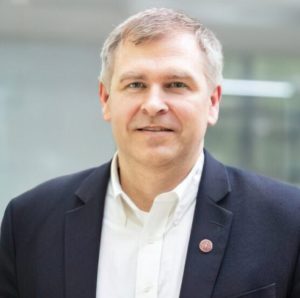
Yaroslav Prytula
Founding dean of the Applied Sciences Faculty of UCUSenior Vice-Rector at Ukrainian Catholic University. He has a doctorate in mathematical analysis. As a researcher, he is involved in econometric modeling and prognosis, and is an expert in micro- and macroeconomics. He is founding dean of the Applied Sciences Faculty of Ukrainian Catholic University (2016) and professor of quantitative methods for making business decisions and economics at the UCU Business School.
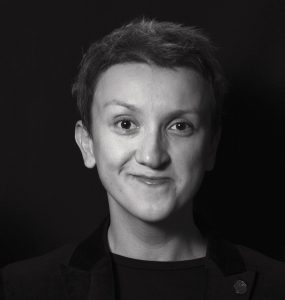
Daria Badior
Editor-in-chief of re/visionsCritic, editor, and film curator based in Kyiv. For several years, she was the head of the Culture section at the Ukrainian online outlet LB.ua. Since 2021, Daria has edited a series of publications on the commemoration of 1941, the reconstruction of Ukraine during and after the current war, and has published articles in Der Tagesspiegel, The Independent, Hyperallergic, Osteuropa, Dwutygodnik, and others. She is a member of the Preparatory Committee of the European Press Prize. She co-curates the Kyiv Critics’ Week film festival. Daria co-edited the 2024 book We Who Have Changed.

Natalie Nougayrède
Editor of re/visionsJournalist, former editor-in-chief of Le Monde and member of The Guardian’s editorial board from 2015 to 2020. She covered post-1989 transitions in Central Europe, including in Ukraine. Natalie was awarded the Albert Londres journalism prize for her coverage of Russia’s war against Ichkeria. She supports media and civil society initiatives in the “Eastern Partnership” region.
The event is co-organized by Research Centre Ukraine / Max Weber Foundation, re/visions, Center for Urban History in partnership with the Institute for Human Sciences (IWM).




Credits
Cover Image: illustration by Nika Aheyeva
Gallery: Iryna Sereda