Lviv’s First Amusement Park: A Contested Urban Status Symbol


Vincent Hoyer
Leibniz Institute for the History and Culture of Eastern Europe (GWZO)27.11.2025, 16:00
Library of Center for Urban History
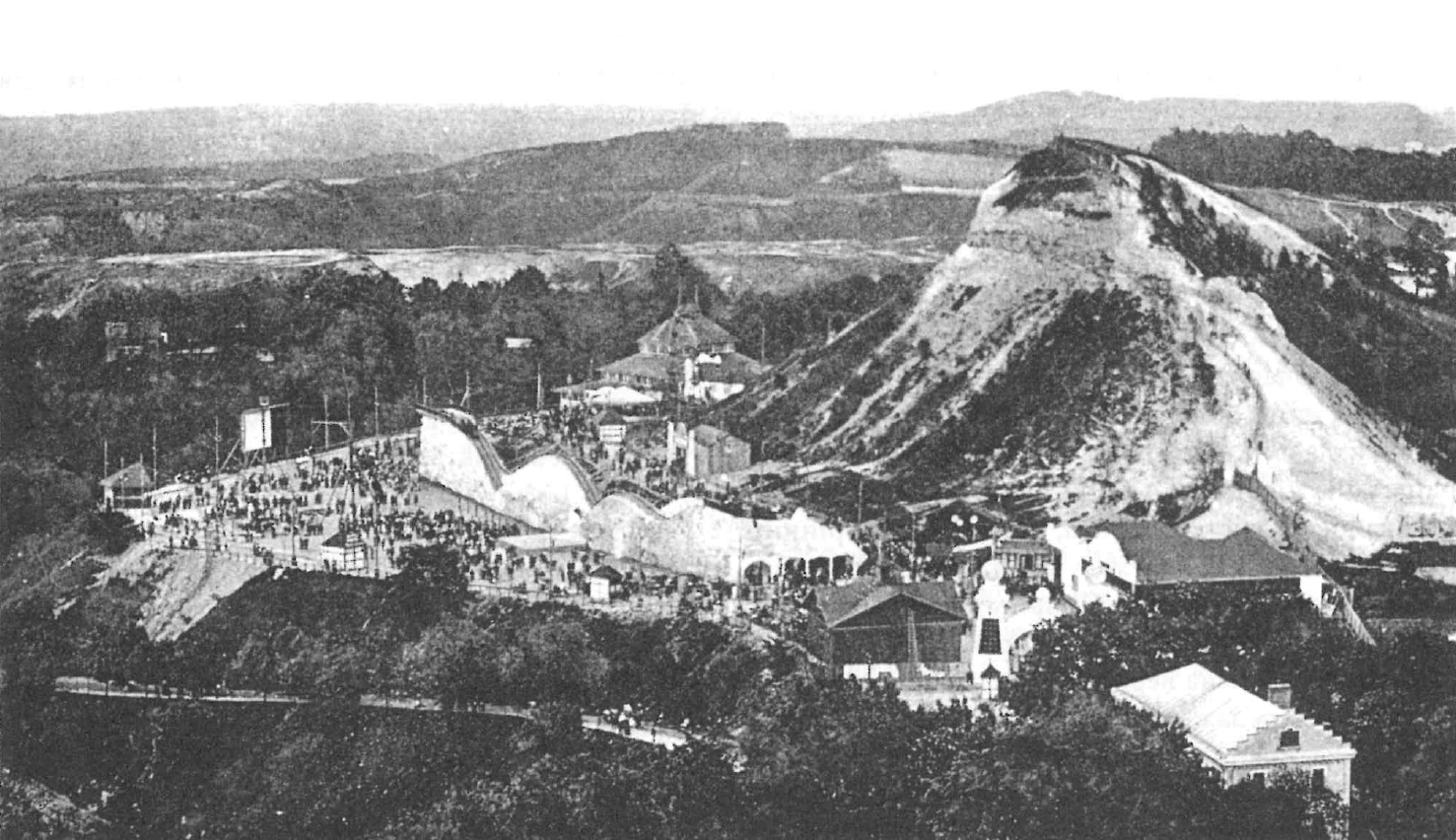
Lviv’s press was full of enthusiasm in early summer 1911: the city’s first large-scale amusement park was about to open its doors on the so-called exhibition hill. Local officials had persuaded two British engineers to invest 100,000 crowns in a newly established company to realize the project. This led to the creation of various attractions, among them a “House of Nonsense,” filled with distorting mirrors and false doors, and a “Joywheel,” a spinning platform that accelerated until riders were thrown off — all built on a 15,000-square-meter site provided by the city. The timing aligned with a month-long fair of local products, which promised a steady stream of visitors and strong public interest. The Luna Park served as the entertainment centerpiece of the fair, an initiative of its Polish-nationalist organizing committee. With this “grand attraction,” newspaper articles assured, Lviv would join the ranks of cities such as London, Paris, Munich, or Vienna.
However, soon after the much-anticipated amusement park opened, fierce debates arose over its national connotation. Jewish and Ukrainian newspapers expressed skepticism about the project, pointing to the Polish-nationalist agenda of the fair. But not long after, even the Polish press began to join boycott calls against the park, because German entrepreneurs were spotted on the premises. In response to ongoing Germanization policies targeting Poles in Prussia, they urged Lviv’s Polish population to stay away from the park in protest. As events unfolded, business owners, local authorities, and nationalists fought over the park’s public image, either seeking to attract or deter visitors.
This talk brings together national visions of space and everyday leisure practices to reveal how popular entertainment transcended mere pastime, becoming a highly politicized arena where issues of social control and belonging in a multiethnic city were negotiated.
PhD candidate at the Leibniz Institute for the History and Culture of Eastern Europe (GWZO) in Leipzig. His thesis Leisure under Control? The Politicization of Popular Entertainment in the Multiethnic Cities of Warsaw, L’viv, and Poznan, 1890-1914 explores how attractions such as theaters, cinemas, or amusement parks shaped everyday life in the emerging cities of late imperial Eastern Europe. During his residency at the Center for Urban History, he will research periodical collections preserved in the city’s libraries to finalize his thesis. 
Vincent Hoyer
Leibniz Institute for the History and Culture of Eastern Europe (GWZO)
Urban Seminar will be held in a workshop format. Researchers are invited to discuss scholarly projects, research at various stages of development, and completed research that is being prepared for publication.
Participation in the Urban Seminar requires preliminary reading and discussion of the researcher's text. If you would like to join the Seminar, please email Maryana Mazurak (m.mazurak@lvivcenter.org), and we will send you the materials in advance.
Credits
Cover Image: Second big amusement park underneath Lviv High Castle in 1913 / "Istorija Lʹvova" Volume 2, p. 331