Ghent Mapped. Linking time, place and people


Fien Danniau
Ghent University12.11.2025, 15:30 CET/16:30 EEST
online / Zoom
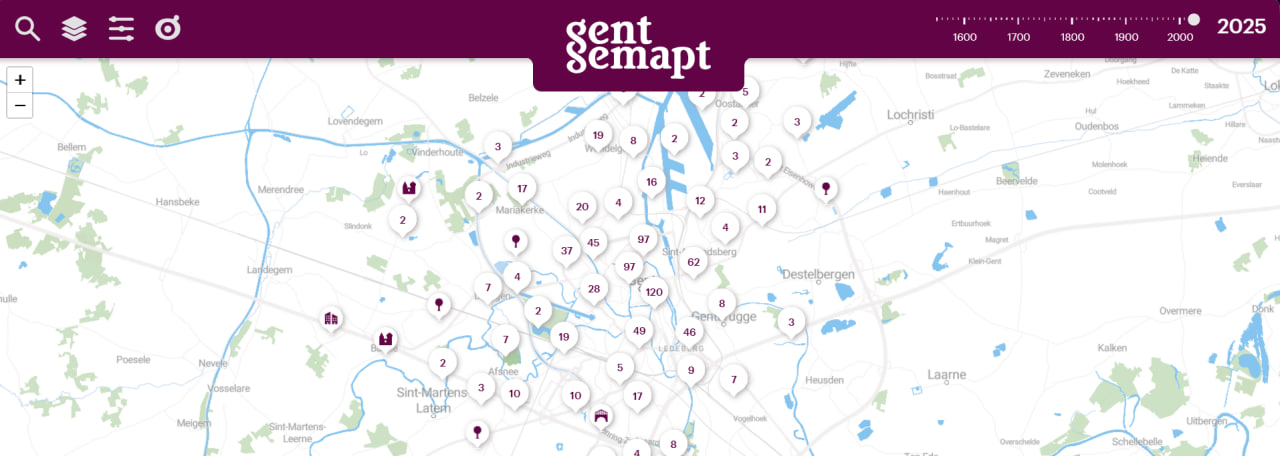
Ghent Mapped is a geospatial platform for presentation and participation where you can scroll through time and space. The map gathers 20 historical maps, 4000 places and 10000 sources and references. It uses ‘place’ and historical maps to link heritage and history with each other and with the public. The project is a partnership of 8 museums and archives with the Ghent Center for Digital Humanities.
In this talk, the speaker will reflect on the meaning of "linking" time, place and people. There is the technological methodology which involves data, IIIF, GIS, linked open data and a Gazetteer. Equally crucial is the question of how you link the digital world with the human one; data with people. Whose past are we able to curate with digitized content and geospatial platforms? How to differentiate between users, citizens and public?
The diversity in geospatial platforms in the digital humanities demonstrates that “Mapped” can be extended to all kinds of places, topics and data. The alliance between digital humanities, heritage and public history seems benevolent, but it involves important negotiations, especially in regard to with who and why we are mapping history.
The event will be launched online. To receive an invitation to participate in events, please contact Sofia Andrusyshyn via email: s.andrusyshyn@lvivcenter.org.ua. The presentation will be in English with simultaneous translation into Ukrainian.
Belgian public historian at Ghent University, specialized in the intersections of history, heritage, and digital media. At the Ghent Center for Digital Humanities, she manages participatory and heritage projects that engage communities with the past through innovative digital tools. Her work explores how storytelling and technology can make history more accessible and inclusive.
Fien Danniau
The event will take place within a series of seminars and workshops around specific cases of urban history digital platforms/projects, "Urban History Digital Infrastructures: Sharing Expertise and Networking Cities", organized by Center for Urban History, with the support of the Center for Governance and Culture in Europe at the University of St.Gallen.