Body, Care and Welfare in Eastern Europe: A Socio-Historical Perspective


April-September 2025
Center for Urban History / online
Situated at the intersection of history and sociology of (health)care, welfare, disability, gender, vulnerabilities, and philanthropy this seminar aims to explore multiple entanglements between body and care, from times of peace to periods of violent conflicts through multiple intermediary situations of “no war, no peace.” The body has been neglected in social sciences, because it had been for a long time associated with nature, biology, emotions, and considered, as such, as a pre-social, naturalized, opposed in its corporality to the mind/the intellectual. Our objective will be to bring the body (in its unified physical and mental dimension) back to analysis as a social construct, the (re)definition of the body (as vulnerable, normal, presenting disabilities, young or elderly …) being at stake in every society and the body being invested and cared about, both as subjects and objects, by a variety of actors, between the states, medical institutions, families, volunteers, community structures, associations, humanitarian NGOs, Churches, private charity.
As for care, we will define it broadly, both as curative treatment (cure) aimed at recovering and, by extension, a system of organized provision of medical care (healthcare) and lasting support (from assistance to housing and legislature) as social relations, attitudes, policies, and practices of assistance to others, that are exercised in a variety of settings (family, community, charity, voluntary help, paid work, etc.) and rely, at the level of social care, on interventions by public authorities, communities and private actors in support of people considered as vulnerable (welfare). Investigating together the complex relationship between body and care, in an interdisciplinary dialogue between historians and sociologists (and other social scientists), through both “top-down” and “bottom-up” approaches, will be a fruitful entry point for getting a better understanding of the changing historical contexts in how societies in Eastern Europe (in Ukraine, in particular) sustained the solidity of social ties, their solicitude for bodies (or, alternatively, their government of bodies), their openness to difference and otherness.
The perceptions of forms of care, bodies dis/able enough to be cared for, gendered dimensions of recipients/providers divide are especially understudied in the eastern European context where state actors disproportionately dominated in the second half of the 20th century, thus making hidden conflicts, deficiencies, competitive groups and informal networks less visible for observers. The changing borders and state belonging, ethnically mixed populations cohabitation made welfare systems especially connected to the ideological and political tasks of “winning hearts and minds”. Competitive groups and legacies of the previous states and regimes, multiplicity of wars experiences of several generations living together made the bodily care especially relevant object of study which helps to uncover the historical rootedness of welfare perceptions and practices.
Session 1, April 16
- Olena Strelnyk (Institute of Sociology, National Academy of Science of Ukraine), Seeing the Invisible: Family Care for the Elderly in War-Affected Ukraine (the first research reflections);
- Ioulia Shukan (School for Advanced Studies in Social Sciences, CERCEC-EHESS, Paris), From Women’s Caregiving for Wounded Soldiers to Prosthetics and Care Provision after Traumatic Limb Amputations in Ukraine (2014-…);
- Iryna Klymenko (Ludwig-Maximilian-University, Munich/Max Weber Stiftung in Ukraine), Governing Bodies: Communal Care between Vigilance and Control in Early Modern Jewish Communities.
Session 2, May 7
- Anastasiya Kholyavka (Center for Urban History of East Central Europe), Images (Representations) of Care: Archival Collections Analysis;
- Vladyslava Moskalets (Center for Urban History of East Central Europe) Between Self-imaging and Social Engineering: Jewish Philanthropy in an Industrial Setting.
Session 3, June 4
- Hanna Zaremba-Kosovych (The Ethnology Institute, National Academy of Science of Ukraine), Formation of a Movement for the Rights of People with Intellectual Disabilities in Ukraine;
- Valentyna Shevchenko (Center for Urban History of East Central Europe), From Craft to Industry: Prosthetics in Ukraine during the First World War and the Interwar Period (pre-title).
Session 4, June 25
- Natalia Otrishchenko (Center for Urban History of East Central Europe), The Right to Feel: Dealing with Emotions in War-related Research and Communication;
- Ivanna Cherchovych (Center for Urban History of East Central Europe) Body in Crime: Women, Court and Child Miscare in Late 19th Century Habsburg Galicia.
Session 5, September 2
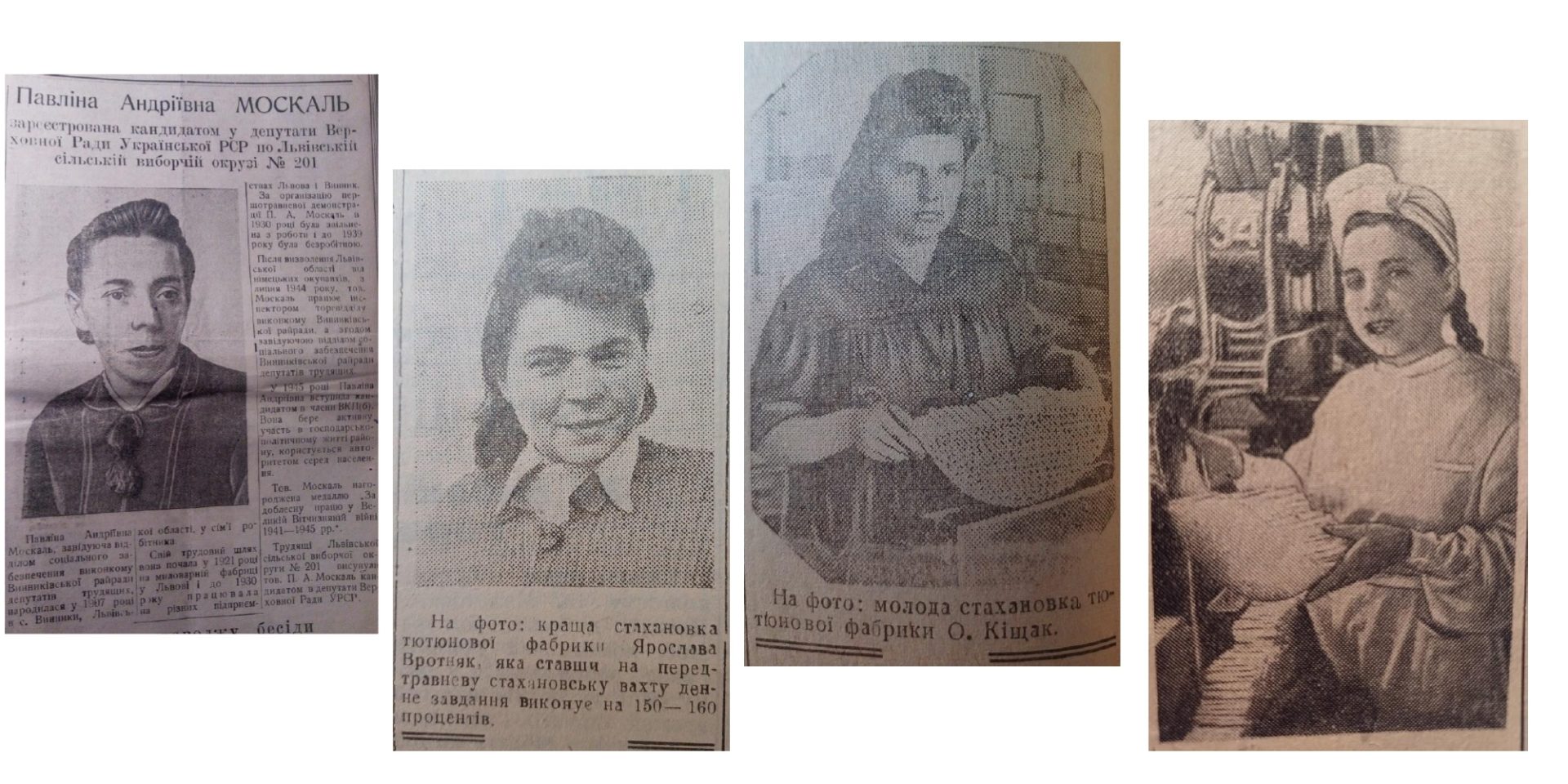
- Iryna Sklokina (Center for Urban History), Welfare on the Borderlands: Women's Councils of the Postwar Western Ukraine
The seminar was held during April-September 2025 in the form of regular monthly sessions involving text readings and group discussions on theoretical and methodological approaches to research on body, care, and welfare in extreme and transformative times.
The seminar is part of the Research Alliance "War and Society in Central and Eastern Europe (XX-XXI Centuries)" between the Center for Urban History of East Central Europe in Lviv, the CERCEC-EHESS in Paris, and the Institute of International Studies at Charles University in Prague.