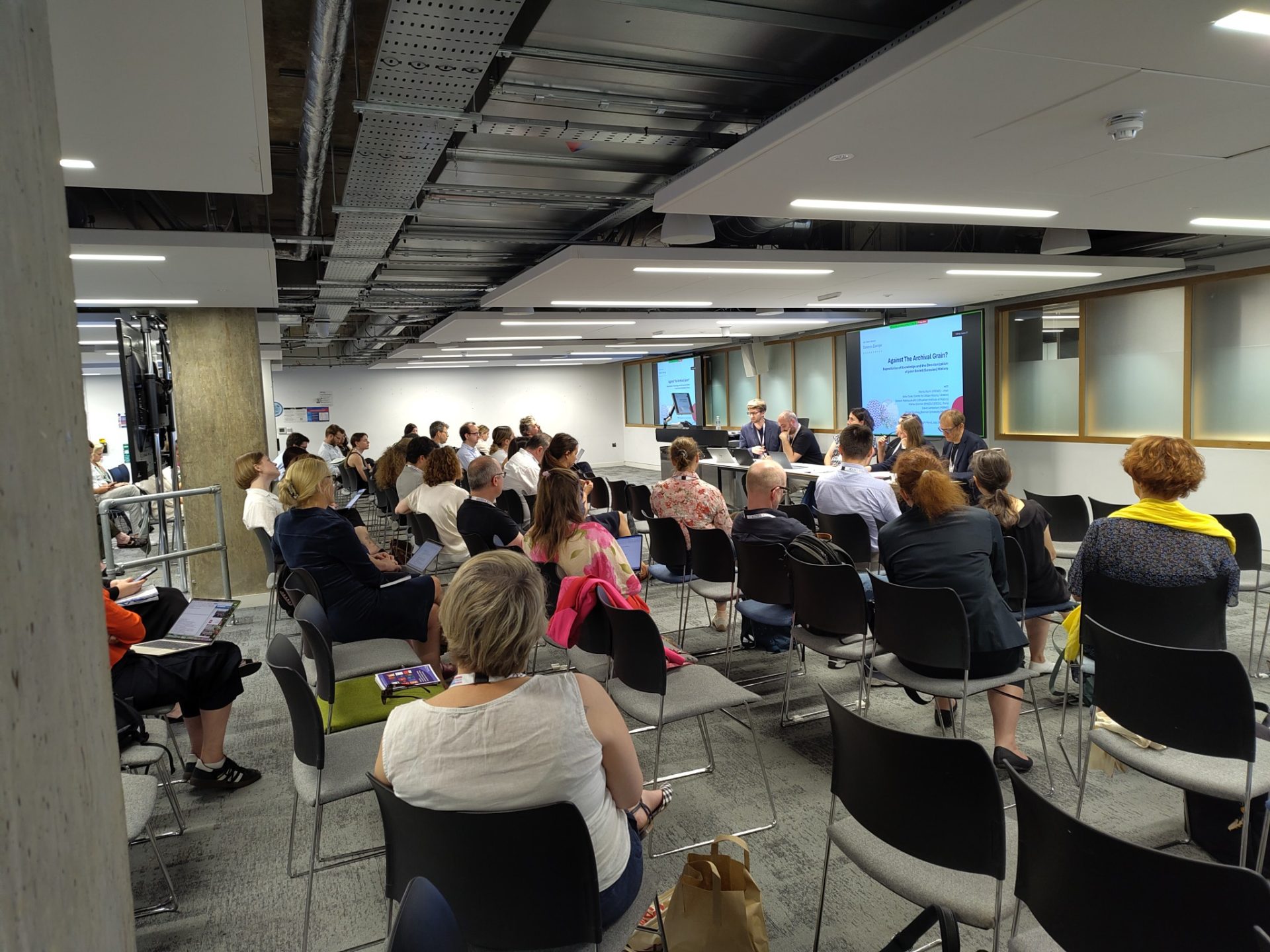
Natalia Otrishchenko and Sofia Dyak Participated in International Congresses


11.08.2025
This July, our colleagues joined several large-scale international professional associations.
Sociologist and researcher Dr. Natalia Otrishchenko attended the Fifth Forum of the International Sociological Association (ISA) "Knowing Justice in the Anthropocene" (July 6-11, 2025, Rabat, Morocco) and the Ninth Conference of the Memory Studies Association (MSA) "Beyond Crises: Resilience and (In)stability" (July 14-18, 2025, Prague, Czech Republic).
The ISA Forum brought together nearly 5000 participants from over 100 countries. During the event, Natalia shared the experience of the "24.02.22, 5 am" initiative in her presentation “Longitudinal, Collaborative, Trauma-Informed: International Project on War Documentation” as part of a discussion on the methodology for studying high-risk situations. Her second presentation, "Theorizing on Futures within the War: Expertise from and on Ukraine in Global Dialogue," was about a study in the UNET network administered by the Center for East European and International Studies (ZOiS) in Berlin. In it, she spoke about the challenges of planning and theorizing the future faced by Ukrainian researchers working in international academic projects.
Approximately 1400 scientists joined the MSA conference. Together with Róża Kochanowska, Olha Krasko, and Alyona Tron, Natalia submitted a panel to the program entitled "Between ruptures and connections: Embodied, family, and collective memory of displaced people during critical junctures," which presented individual research in the UCORE network. The common objective of the presentations was to outline the ways in which people refer to historical processes and events (such as wars, genocides, forced displacement, numerous protests, pandemics, etc.) to understand the experience of the ongoing Russian aggression against Ukraine. Natalia's presentation, "Building on the experience of crisis: Recalling COVID-19 Pandemic amidst the Full-Scale War," was about how memories of the pandemic are actualized during a full-scale war. The conference also featured a Book Raffle, where Natalia brought Center’s book Conversations with Those Who Ask About the War (2024).
Historian and director of the Center, Dr. Sofia Dyak joined the XI Congress of the International Council for Central and East European Studies (ICCEES), which took place on July 21-25 at University College London. The theme of this year's congress was "Disruptions". The regions covered by ICCEES are currently experiencing a period of profound change and disruption, especially after Russia's full-scale invasion of Ukraine in 2022. Hence, the need to break down traditional approaches to understanding, studying, and researching the regions of Central and Eastern Europe-their history, culture, languages, politics, economies, infrastructures, and societies. Knowledge about specific places is more important than ever to understand how local and regional processes interact with transregional and global dynamics. At the same time, the need to re-evaluate our methodologies, assumptions, and perspectives has never been more urgent than now.
Sofia Dyak took part in the roundtable discussion "Against the Archival Grain?" Together with Gintare Malinuskaite (Lithuanian Institute of History), Masha Cerovic (CERCEC/EHESS), David Jishkariani (Max Weber Stiftung — Georgia Branch Office), and Walter Sperling (Bremen University/Max Weber Stiftung), with Moritz Florin as chair (Max Weber Network Eastern Europe), they discussed the epistemology of historical knowledge and the history of archival infrastructures in the region. Among the topics raised in the discussion was how our understanding of the archives' embeddedness in the projects of territorial expansion and ideological domination affects the work of historians. How can researchers critically analyze and question not only sources created in imperial or Soviet institutions, but also focus on archival systems and practices themselves, using and revising the conceptual frameworks developed within the "archival turn" with its focus on contextualizing knowledge, historicizing its creation, and analyzing the hierarchies embedded in the very structures of archives and collections? How is the responsibility of archivists, communities, and historians co-created? Another important angle of discussion was digitization, which helps preserve archives against destruction and loss, especially in war, facilitates access, but also detaches archives and their holdings from the specificity and multiplicity of contexts.
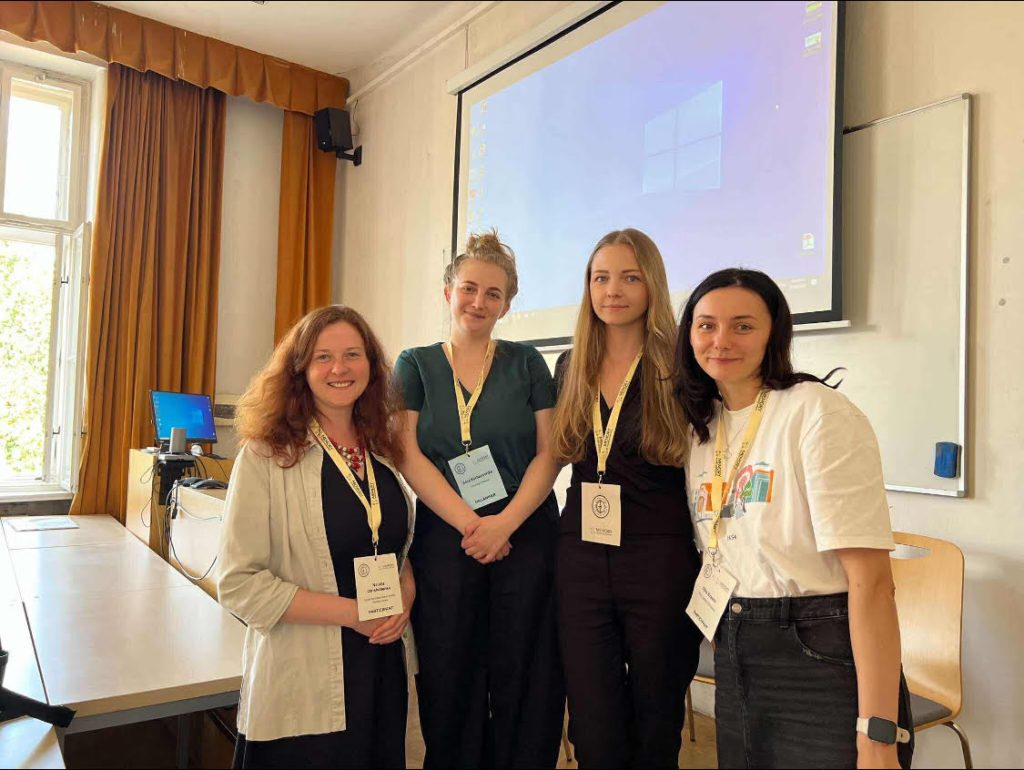
Natalia Otrishchenko, Róża Kochanowska, Olha Krasko, and Alyona Tron at the Ninth Conference of the Memory Studies Association / Natalia Otrishchenko
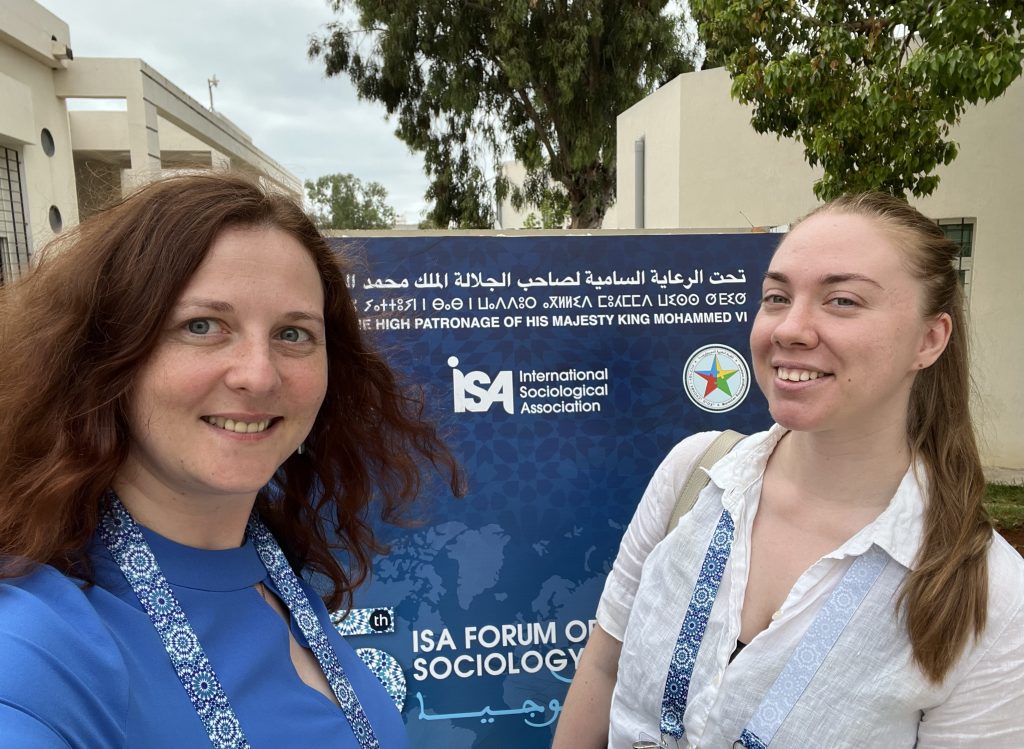
Natalia Otrishchenko and Daria Yashkina at the Fifth Forum of the International Sociological Association / Natalia Otrishchenko
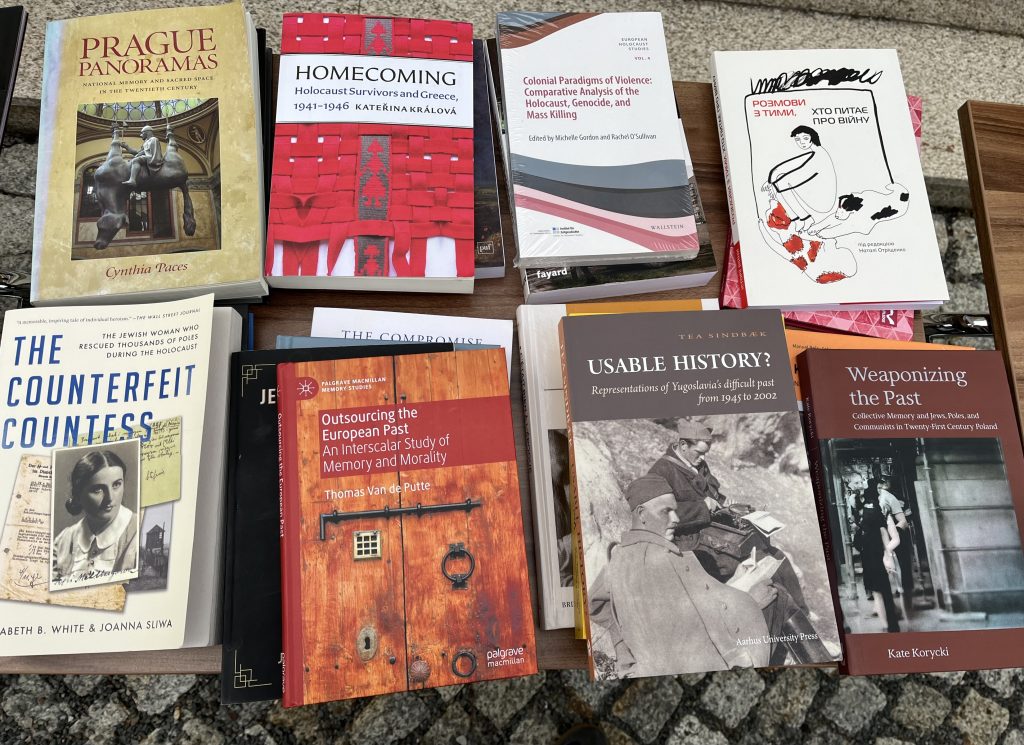
“Conversations with those who ask about the war” among other publications at the Book Raffle / Natalia Otrishchenko
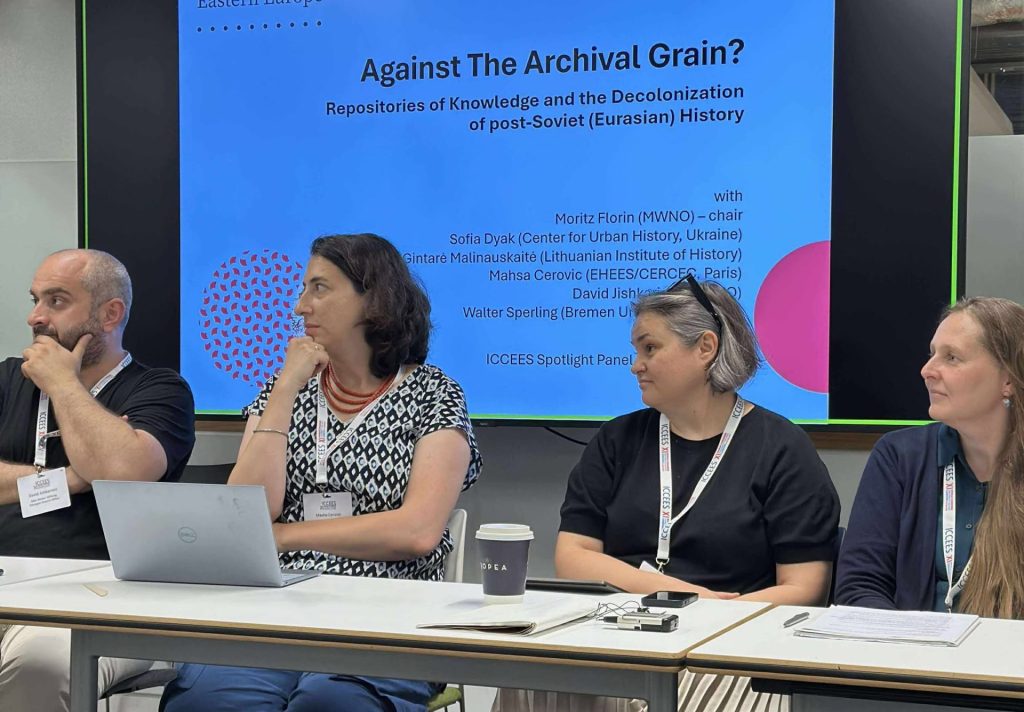
Gintare Malinuskaite, Masha Cerovic, Sofia Dyak, David Jishkariani, Walter Sperling, Moritz Florin during the roundtable discussion "Against the Archival Grain?" / Max Weber Network Eastern Europe
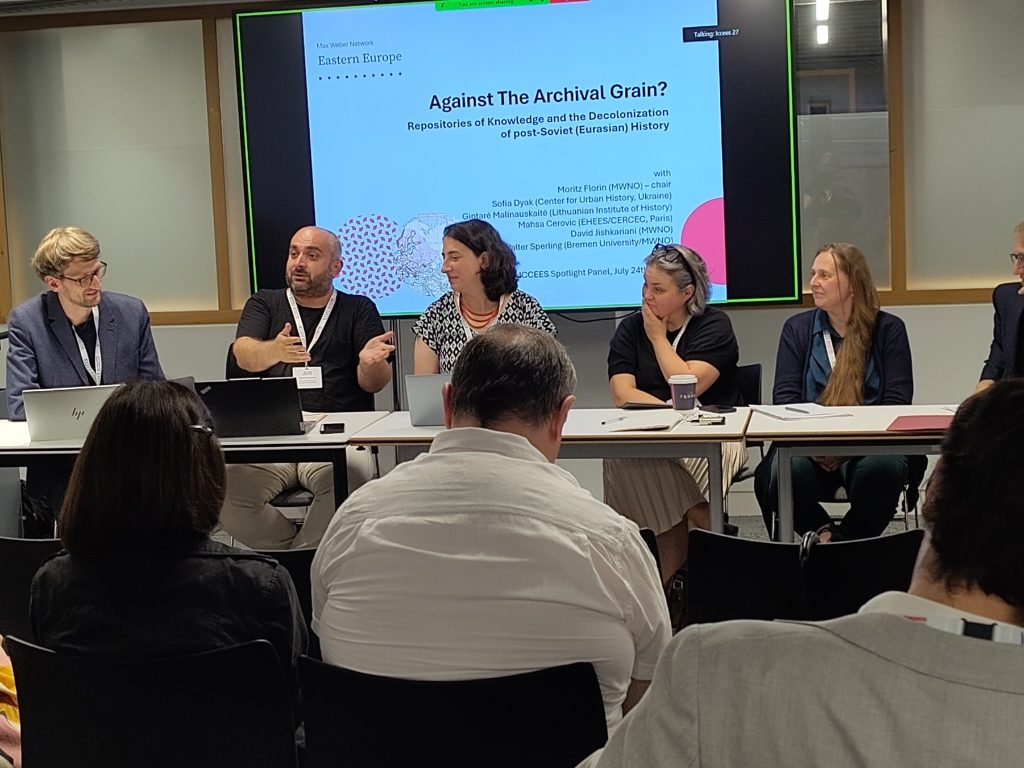
Gintare Malinuskaite, Masha Cerovic, Sofia Dyak, David Jishkariani, Walter Sperling, Moritz Florin during the roundtable discussion "Against the Archival Grain?" / Max Weber Network Eastern Europe
Credits
Cover Image: The XI Congress of the International Council for Central and East European Studies / Max Weber Network Eastern Europe